July 23, 2026
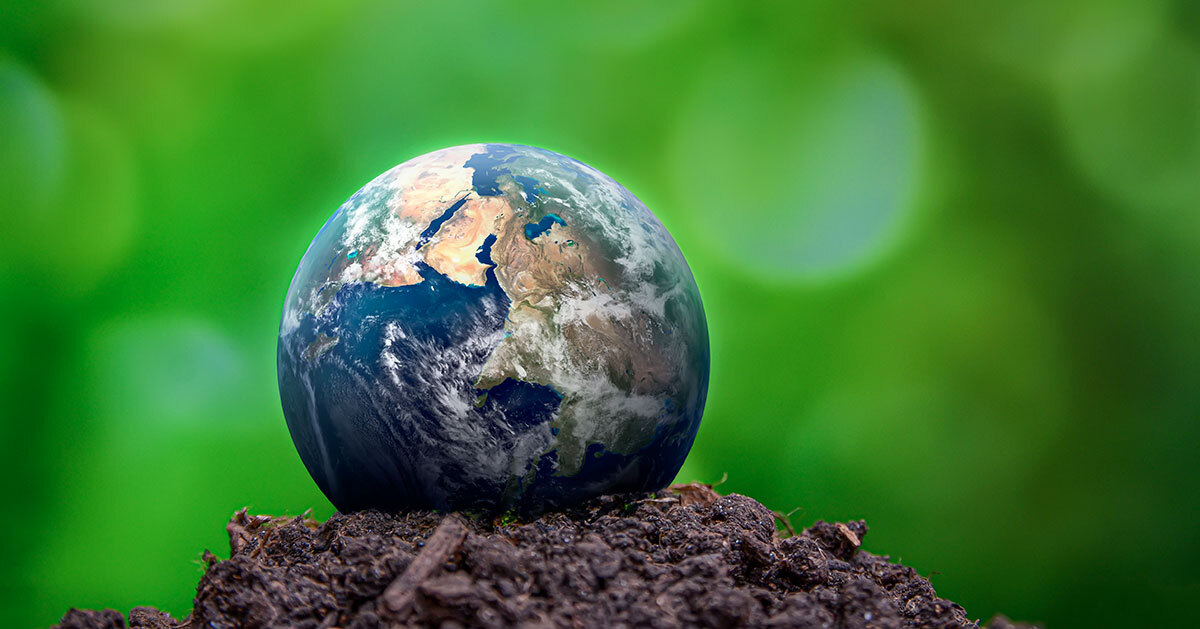
July 30 will mark Earth Overshoot Day. By that date, humanity will have consumed all the resources that ecosystems can regenerate in a single year. In a sense, we are living on credit, drawing on the planet’s natural capital rather than on the resources it is capable of renewing.
However, each country has its own specific Overshoot Day. Based on the lifestyle and consumption habits of a country’s population, it answers a simple question: if all of humanity lived like the residents of that country, on what date would the planet’s annual resources be depleted? In Canada, that date was March 8, 2026. In other words, if everyone consumed as much as Canadians do, it would take the equivalent of 5,5 planets to meet our needs sustainably.
Pushing back this deadline depends on several factors, and science can contribute in many ways. Through evidence-based insights, science can inform public debate to drive changes in public policy. It can help us better understand human behaviour, thereby fostering sustainable change and new approaches in the design of technological innovations.
At ÉTS, this contribution takes many forms. Research teams are exploring solutions to better manage resources, reduce waste, limit greenhouse gas emissions, promote local production, and improve energy efficiency. These are all levers that help reduce our ecological footprint. Although their areas of expertise vary, these research projects share a common goal: to do more with less and, each in their own way, help push back Earth Overshoot Day.
Shaping public policy
Pushing back Earth Overshoot Day does not depend solely on technological innovations. Decisions made by governments, municipalities, and organizations also influence our ability to use resources more sustainably. To be effective, these decisions must be based on the best available knowledge. By collaborating with decision-makers and applying their expertise to public policy, researchers help develop policies that are better informed and better suited to environmental, climate, and social challenges.

Annie Levasseur helps guide Quebec’s climate transition. As a member of the Advisory Committee on Climate Change, she advises the government on ways to accelerate decarbonization and adaptation to climate change. She is also involved in developing engineering education to better prepare engineers for the challenges of the socio-ecological transition by integrating environmental, social, and economic factors from the onset of project design. She is the scientific director of the Center for Intersectoral Studies and Research on the Circular Economy.
As Chief Scientific Advisor for the municipality of Sainte-Marthe, Janie Masse-Dufresne is the link between research and municipal decision-makers. She facilitates access to scientific knowledge by supporting decisions on community issues, including infrastructure management, drinking water, and climate change adaptation. Her role is to translate research advances into practical tools to support municipal action.

Better resource management
Preserving natural resources begins with a better understanding of them. Whether it’s water, forests, or the environmental impacts of our activities, decision-support tools help us use these resources more sustainably.

Richard Arsenault develops decision-support tools that promote better water resource management. Through modelling, artificial intelligence, and climate forecasting, his work helps managers allocate this essential resource more effectively—whether to meet community needs, support economic activities, or preserve ecosystems.
Andrew Henderson develops models to measure the environmental impacts of a product, an industrial process, or a public policy before implementation. Using life-cycle analysis, his research assesses the fate of contaminants in the air, water, and soil. These tools help decision-makers compare different scenarios and prioritize solutions that most effectively reduce the environmental footprint.
For his part, Mustapha Ouhimmou puts his expertise in optimization to the sustainable management of forest resources. In collaboration with industry partners and Indigenous communities, he develops decision-support tools that enable better planning of timber harvesting, transportation, and processing. The goal is to use this renewable resource more efficiently, balancing economic, environmental, and social imperatives.
Reducing waste
Each year, millions of metric tons of still-usable materials are landfilled or lost. Yet, within a circular economy framework, this waste can be transformed into new raw materials.
Elmira Moosavi is researching the recovery of precious, rare, and critical metals in waste produced by the mining and metallurgical industries and in end-of-life electronic products. By combining materials characterization, modelling, and recycling processes, her research is focused on transforming this waste into new resources while reducing dependence on mining. Her team also analyses the environmental footprint of these processes to prioritize recycling solutions that consume less energy and generate fewer greenhouse gas emissions.

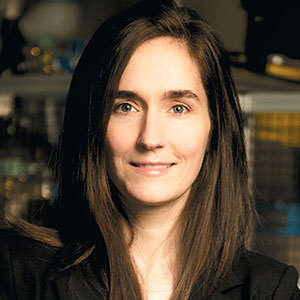
Martine Dubé is rethinking the life cycle of composite materials used primarily in the aerospace and wind energy sectors. Her research focuses on replacing hard-to-recycle composites with thermoplastic composites, which can be repaired, recycled, and reused more easily. Her team is also developing processes to recover manufacturing scrap and end-of-life structures—such as wind turbine blades and aircraft parts—to give them a second life rather than sending them to landfills.
Amin Chaabane is applying optimization techniques to advance the circular economy in the construction sector. His research aims to improve the reuse of lumber waste from construction, renovation, and demolition sites by rethinking how it is collected, sorted, and transported. By developing reverse logistics models and decision-support tools, his team is researching higher-quality wood recovery for reuse and recycling, while reducing the amount of waste sent to landfills and the greenhouse gas emissions associated with waste management.
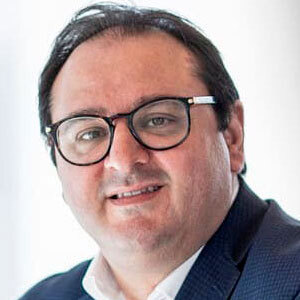
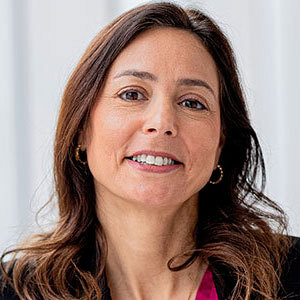
Rim Larbi focuses on industrial waste recovery and the circular economy. Her goal is to transform materials considered waste into new resources that can be reused in other industrial processes, reducing the amount of material sent to landfills.
Local production
Producing more food locally helps reduce transportation needs, strengthen community resilience, and, in some cases, lower the environmental footprint of our food.
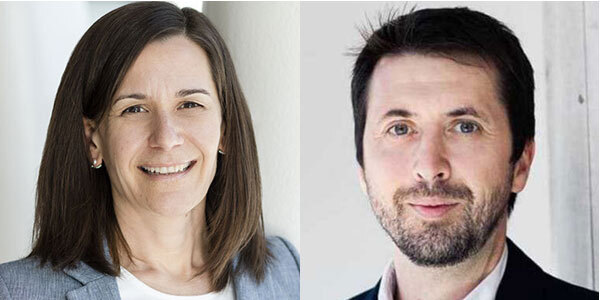
Didier Haillot and Danielle Monfet are developing tools to make Quebec’s greenhouses more energy-efficient and environmentally sustainable. Using numerical models, they evaluate the effectiveness of various technologies—thermal storage, solar energy, and the recovery of waste heat from data centers—to help growers choose the solutions best suited to their facilities. By reducing the energy needs of greenhouses while promoting local fruit and vegetable production, their research helps increase Quebec’s food self-sufficiency and reduce the environmental footprint of our food supply.
Reducing energy consumption
The most sustainable energy is the energy we don’t need to produce. This is why improving the energy efficiency of buildings and systems is a key strategy for reducing our ecological footprint.

Daniel Rousse develops technologies that improve the energy efficiency of buildings and industrial processes. Heat recovery, integrating renewable energy, and optimizing thermal systems are among the solutions his team is studying to provide the same services while consuming less energy.
Conclusion
None of these innovations alone are enough to push back Earth Overshoot Day. However, taken as a whole, they show how research can address multiple issues simultaneously: managing resources more effectively, reducing waste, limiting greenhouse gas emissions, producing closer to consumers, and improving energy efficiency. Supported by public policies and collective action, these solutions help reduce our ecological footprint and build a more sustainable future.