October 21, 2026

Abstract
Making pharmaceutical supply chains greener is challenging because companies need to reduce emissions while ensuring that patients receive the medicines they need on time. This research shows how green investment, government policy and profit-sharing can work together to reduce emissions while improving service and profitability.
The sustainability challenge in pharmaceutical supply chains
Pharmaceutical supply chains must maintain medicine availability while reducing the environmental impact of production, transportation and storage. Green supply chain management is increasingly being used to evaluate and reduce environmental impacts across supply-chain operations (Dzikriansyah et al., 2023). Transportation and warehousing alone account for about 13% and 11%, respectively, of the greenhouse-gas emissions in supply chains (Ren et al., 2023). Higher inventory levels can protect against shortages, but they also increase warehousing activity. More frequent deliveries can improve responsiveness, but they can increase transportation emissions. These tensions are especially important in pharmaceutical supply chains, where periodic inventory policies have been studied as a way of addressing shortages and public health concerns under uncertain demand (Ramandi & Bafruei, 2020). Our study asks whether these trade-offs can be managed more effectively when companies coordinate their decisions and when governments combine environmental taxes with incentives for greener investment. Previous research also indicates that subsidies can have a greater impact than taxes on optimizing environmental improvements, reinforcing the importance of environmental policy design (Yi et al., 2022).
Connecting inventory decisions, green investment and coordination
Despite growing research on green pharmaceutical supply chains, an important gap remains in jointly considering green investment, periodic inventory decisions, government environmental policies, and supply chain coordination. Our study brings these elements together to balance environmental performance, service, and profitability. We developed a two-echelon pharmaceutical supply chain consisting of a vendor and a downstream buyer such as a pharmacy. The buyer periodically reviews its inventory and determines the safety stock needed to manage uncertain demand. Periodic review is highly relevant to pharmaceutical distribution because inventory availability and service levels must be managed under uncertain demand (Darzi Ramandi et al., 2023). The vendor decides how frequently to replenish the buyer and how much to invest in green technology. The analysis compares three ways of making these decisions. In a decentralized setting, each company mainly protects its own profit. In a centralized setting, decisions are made in the interest of the supply chain as a whole. A third setting uses a profit-sharing agreement so that both partners have an economic incentive to pursue a coordinated solution. The model also includes emissions from production, transportation and warehousing, as well as energy use at the manufacturing site. Moreover, government policy comes into play through carbon-related taxes and incentives for reducing emissions, consistent with research showing how taxes and incentive programs can shape green supply-chain decisions (Giri et al., 2019). This allows the study to examine economic, environmental and service outcomes simultaneously rather than treating them separately.
Performance gains through green investment and coordination
The proposed coordination approach increased total supply-chain profit by up to 52% and improved service levels by more than 20%. Figure 1 further illustrates how cooperative and non-cooperative decision-making affects profitability for the vendor and buyer. At the same time, green investments reduced transportation-related greenhouse-gas emissions by up to 70% and production-related emissions by 11.5%.
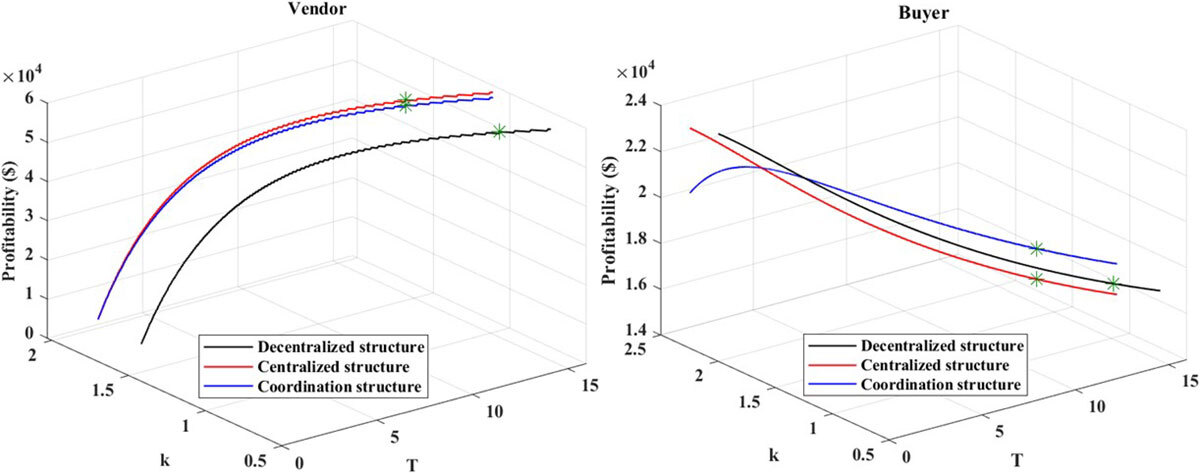
Figure 1. Effect of cooperative vs. non-cooperative decisions on manufacturer and buyer profitability.
The study also shows why policy design matters. Green incentives encourage manufacturers to invest in cleaner technologies, while high emission taxes without complementary incentives can make coordination less attractive. In one analysis, as illustrated in Figure 2, increasing the greenhouse-gas tax rate from 0.05 to 0.2 (kgCO2/year) reduced the service level by about 3%. This trade-off is extremely important in pharmaceutical supply chains, where service disruptions can create public health risks. These findings suggest that environmental regulation works best when it goes beyond penalizing emissions. Incentives that help firms invest in cleaner technology can reduce the environmental footprint while protecting operational performance.
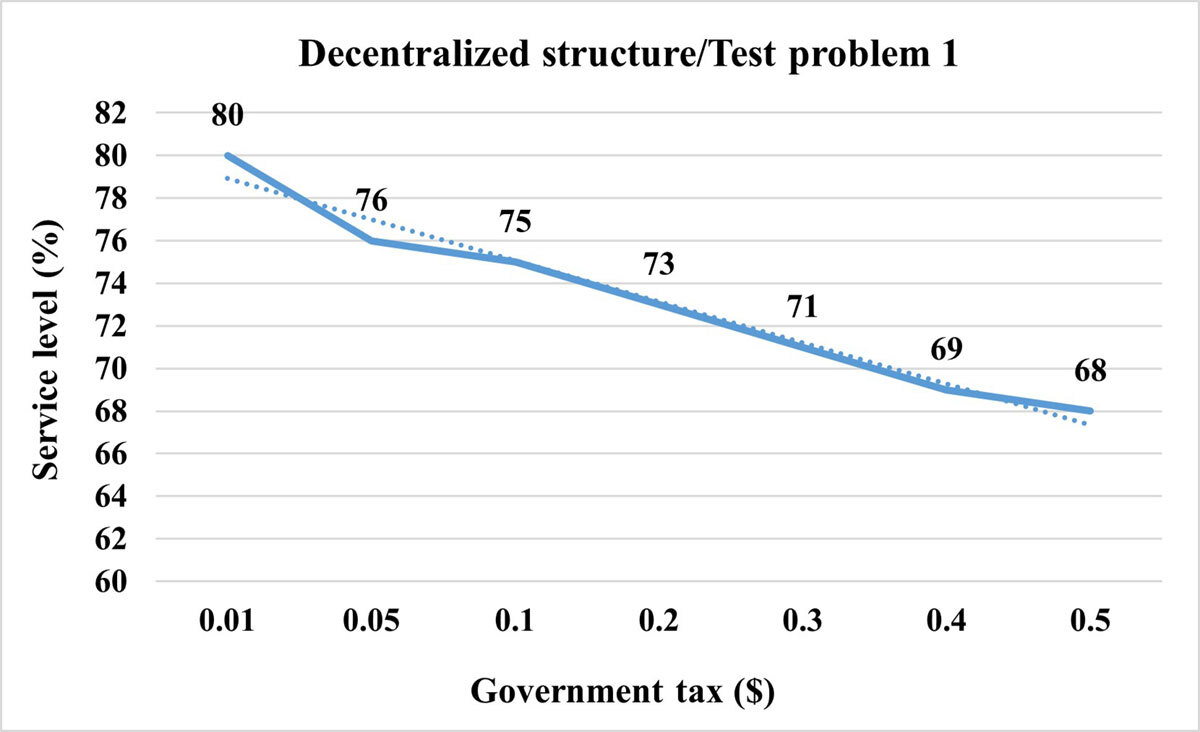
Figure 2. Impact of government tax policy on SC service level.
Coordination also changes how the economic benefits are shared between supply chain members. As shown in Figure 3, cooperative decision-making can improve the profitability of both the vendor and buyer compared to non-cooperative decision-making. The profit-sharing mechanism provides a range in which both members benefit from coordination, helping align their individual interests with overall supply chain performance.
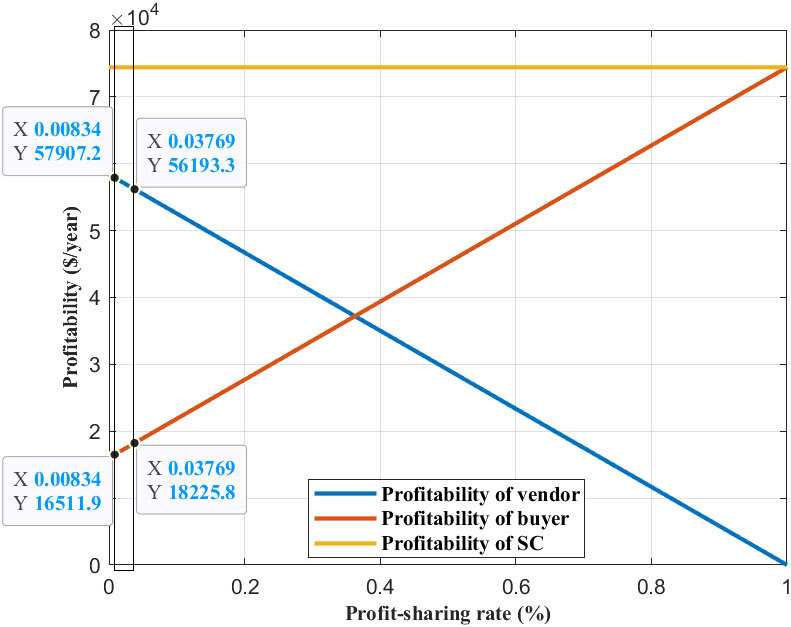
Figure 3. Incidence du taux de partage des bénéfices sur les fonctions de bénéfice.
Together, these findings show that improving pharmaceutical supply chain sustainability goes beyond simply imposing emission taxes. Green incentives can support cleaner technologies, while coordination can distribute the resulting economic benefits across supply chain members without sacrificing service performance.
Conclusion and management insights
These findings provide practical guidance for improving sustainable pharmaceutical supply chains. For managers, green investments should be integrated with inventory and replenishment decisions, while coordination between vendors and downstream partners can align their objectives. Profit-sharing can facilitate such coordination by ensuring mutual benefits. For policymakers, environmental regulations should balance emission reduction with pharmaceutical service performance. Rather than relying heavily on emission taxes, complementary green incentives can encourage cleaner technologies without compromising operational objectives. Overall, integrating environmental, operational, and coordination decisions can support both sustainability and reliability in pharmaceutical supply chains.
References
Darzi Ramandi, M., Bafruei, M. K., Ansaripoor, A. H., Paul, S. K., & Chowdhury, M. M. H. (2023). Coordination mechanisms in a two-stage green supply chain: Analyzing the impact of transportation decisions on environment. International Transactions in Operational Research, 30(6), 4170–4207. https://doi.org/ 10.1111/itor.13087
Dzikriansyah, M. A., Masudin, I., Zulfikarijah, F., Jihadi, M., & Jatmiko, R. D. (2023). The role of green supply chain management practices on environmental performance: A case of Indonesian small and medium enterprises. Cleaner Logistics and Supply Chain, 6, 100100. doi:10.1016/j.clscn.2023.100100
Giri, R. N., Mondal, S. K., & Maiti, M. (2019). Government intervention on a competing supply chain with two green manufacturers and a retailer. Computers & Industrial Engineering, 128, 104–121. doi:10.1016/j.cie.2018.12.030
Jauhari, W. A., Wangsa, I. D., Hishamuddin, H., & Rizky, N. (2023). A sustainable vendor-buyer inventory model with incentives, green investment and energy usage under stochastic demand. Cogent Business & Management, 10(1), 2158609. doi:10.1080/23311975.2022.2158609
Ramandi, M. D., & Bafruei, M. K. (2020). Effects of government’s policy on supply chain coordination with a periodic review inventory system to reduce greenhouse gas emissions. Computers & Industrial Engineering, 148, 106756.
Ren, Q., Ku, Y., Wang, Y., & Wu, P. (2023). Research on design and optimization of green warehouse system based on case analysis. Journal of Cleaner Production, 388, 135998. doi:10.1016/j.jclepro.2023.135998
Yi, Y., Wang, Y., Fu, C., & Li, Y. (2022). Taxes or subsidies to promote investment in green technologies for a supply chain considering consumer preferences for green products. Computers & Industrial Engineering, 171, 108371. doi:10.1016/j.cie.2022.108371