February 4, 2026
The research conducted by ÉTS Professor Éric David is at the crossroads of polymer materials science and high-voltage engineering. For more than twenty-five years, he has focused on an element that appears second-rated but is definitely crucial in electrical equipment: insulation systems. Made primarily of polymers, these insulators must withstand significant mechanical, electrical, and thermal stresses. Paradoxically, they are also the weak point of many devices: less robust than metals like copper or steel, they often dictate the lifespan of critical equipment, such as the large rotating machines that power electrical networks.
Professor David also devotes a significant part of his research to polymeric materials themselves, and more specifically to modifying their properties by incorporating carbon reinforcements. Adding carbon particles, albeit microscopic, makes it possible to adjust conductivity, reinforce mechanical strength, and optimize heat dissipation.
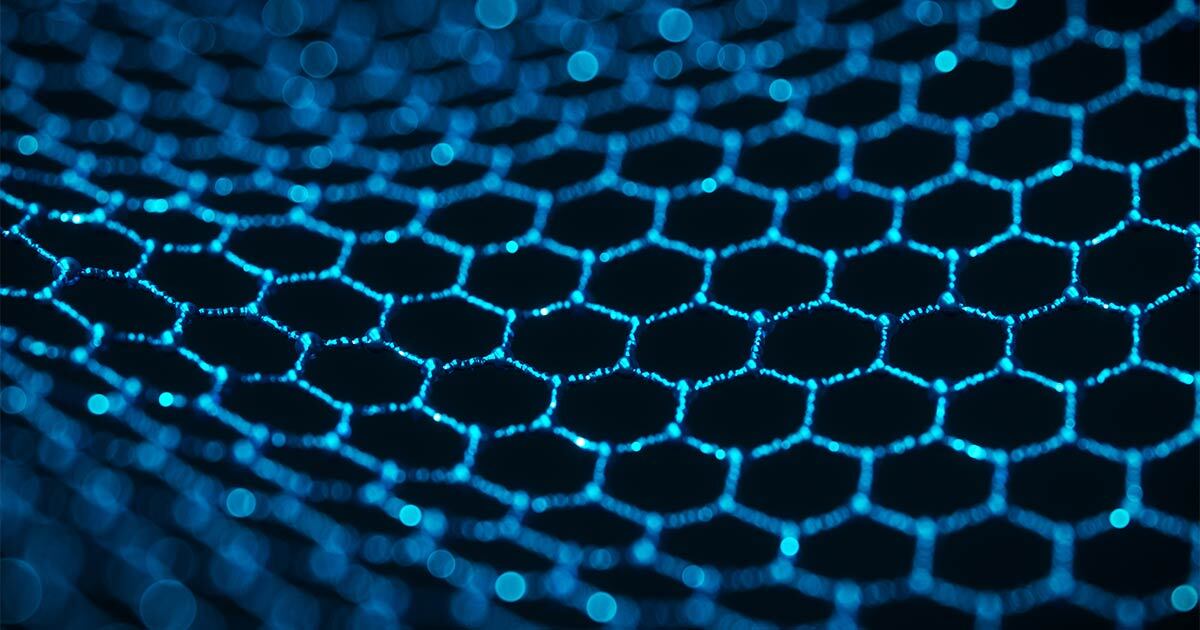
With this in mind, a long-term collaboration was established with NanoXplore, a Montreal-based company that has become one of the world's leading producers of graphene. Graphene, consisting of a single layer of carbon atoms, has exceptional properties: high conductivity, high mechanical strength, flexibility, and thermal stability. It also offers a major environmental advantage: its production emits about ten times less greenhouse gases than traditional carbon black, widely used in industry to reinforce polymers.
Depending on the concentration incorporated into the material, graphene can deliver very different performance characteristics. At low concentrations (less than 1%), it improves the insulating properties of polyolefins used, for example, as insulating walls in extruded cables for electricity transmission and distribution. At higher concentrations (around 5% to 8%), the composite reaches the percolation threshold and becomes conductive. This enables the development of durable, high-performance semiconductor coatings for rotating machinery and other electrotechnical equipment.
There are numerous applications for this technology: facilitating plastic recycling by improving its malleability, reinforcing thin films used in batteries with carbon black or graphene, and protecting materials exposed to ultraviolet radiation. One of Éric David's more forward-looking projects even involves designing polymers capable of protecting against cosmic radiation in the context of lunar exploration.

ÉTS Professor Éric David
Tools to Improve Diagnostics and Extend Equipment Life
Another major focus of Éric David's work concerns the reliability of large electrical equipment, particularly that of Hydro-Québec. Hydroelectric generators—some of which are over 50 to 60 years old—must be assessed regularly to avoid emergency shutdowns and plan repairs. Professor David helped develop diagnostic techniques by measuring the dielectric properties of insulation systems, as well as the software needed to interpret these metrics.
These tools make it possible to classify the condition of a fleet of equipment and identify items that are most likely to break down. Today, Éric David is involved in the process of standardizing these methods to establish international standards for their implementation and interpretation.
Simultaneously, he worked on the design of very high-voltage “dry” capacitors, without synthetic insulating oil, capable of withstanding electric fields of around 100 kV/mm without discharge. This is a significant technological advance in a field that has traditionally relied on mineral or synthetic liquids.
Expertise at the Heart of Today's Energy Challenges
Whether developing nanocomposites for the energy transport industry, improving the reliability of electrical machines, or designing materials suited to extreme environments, Éric David's work serves a common goal: to make electrical systems more efficient, safer, and more sustainable.
By mastering the microscopic structure of polymers and incorporating reinforcements such as graphene, he is paving the way for a new generation of materials for electrical engineering that are more efficient, more eco-friendly, and better suited to the energy challenges of today and tomorrow.