January 12, 2026
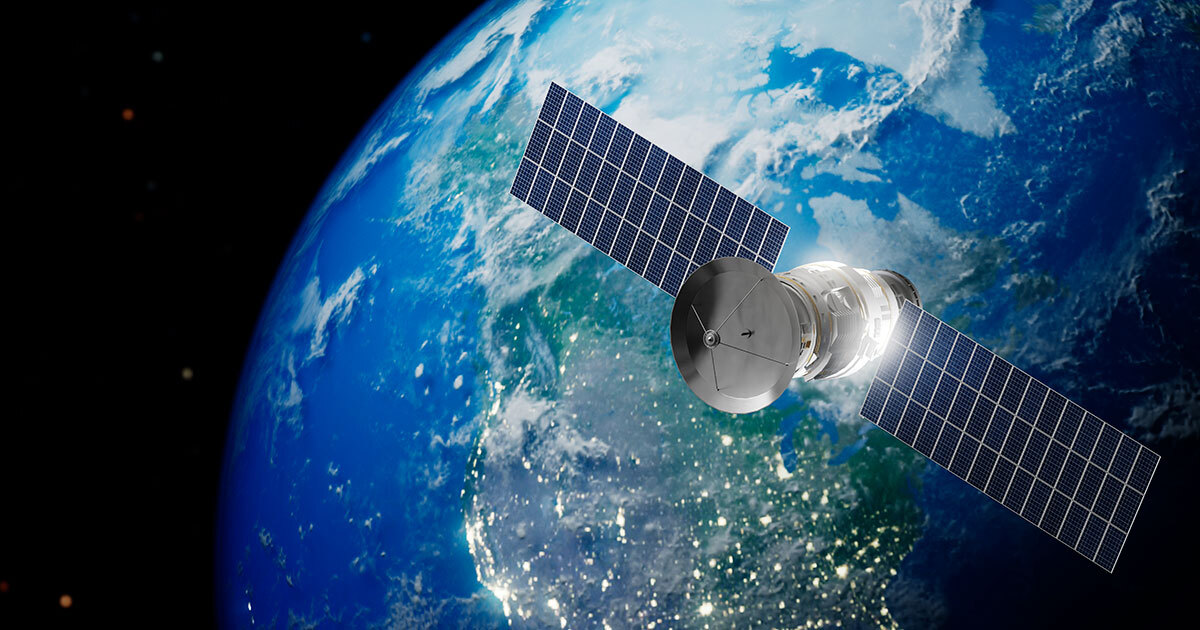
Satellites are now so ubiquitous that we often forget their essential role. They ensure connectivity, assist with air navigation, and quickly provide images of areas affected by hurricanes or earthquakes. They are also instrumental in our exploration endeavors, whether it’s returning to the Moon, preparing for missions to Mars, or monitoring solar storms that threaten our electrical grids.
However, this increased dependence on space infrastructure is becoming a serious problem: Earth's orbit is getting increasingly congested. The number of satellites in low Earth orbit could reach 60,000 by 2030, and each collision produces additional debris that remains in orbit for years. The faster this spiral accelerates, the more pressing the question becomes: how can we continue to enjoy the benefits these systems offer us without turning space into an orbital junkyard?
ÉTS Professor Jesus David Gonzalez Llorente is focusing on this issue specifically. His research program aims to design and operate the spacecraft of the future in a way that ensures the sustainability of space, while increasing the reliability and autonomy of small satellites, which are now at the heart of a constellation boom.
Satellites Making the Right Decisions, on Their Own
With his background in electrical engineering, computer science, and systems engineering, Professor Gonzalez Llorente is interested in technologies that will enable satellites to become truly autonomous agents. Small devices, often weighing less than 500 kg and sometimes as little as 5 kg, offer a promising avenue: less expensive and quicker to deploy, they have become the cornerstone of many modern missions. But their autonomy remains limited due to a lack of computing power, memory and, above all, energy.
This is why Professor Gonzalez Llorente is working to integrate more embedded intelligence into satellites, enabling them to coordinate with each other, avoid collisions, and detect anomalies before they become critical. Part of his work, for example, focuses on algorithms capable of sorting images captured in orbit. The satellite can discard those that are blurred or obscured by clouds, classify those that are relevant, and send only those that are truly useful back to Earth. This saves energy, bandwidth, and operating time, while improving mission efficiency.
Another aspect of this embedded intelligence is the satellite's ability to self-diagnose. By analyzing their own operating data (temperatures, electrical voltages, solar exposure, magnetic field variations), they could learn to recognize unexpected behavior, anticipate failures, or adjust their operating mode to extend their lifespan. In a space where each intervention costs millions and repairs are virtually impossible, this autonomy becomes crucial.
Energy, the Achilles Heel of Intelligent Satellites
Making a satellite more autonomous essentially means increasing its energy requirements. However, onboard resources are strictly limited. Satellites rely mainly on solar panels, supplemented by batteries and sometimes supercapacitors, which offer high instant power but low capacity. Added to this physical constraint is the unpredictable environment: the spacecraft constantly moves between sunlight and shadow, its needs vary depending on the workload and planned operations, and its electrical system has to cope with extreme thermal cycles that accelerate its degradation.
This is the second focus of Jesus David Gonzalez Llorente's research. He is developing predictive models to estimate the health of batteries, anticipate their aging, and optimize energy distribution between different tasks. The idea is to equip the satellite with a real “energy brain” intelligent enough to decide when to perform a demanding operation, when to switch to economy mode, and when to take advantage of solar exposure to recharge its reserves.
Professor Gonzalez Llorente's work also focuses on qualifying commercial components (such as supercapacitors) for space environments. These components are subjected to intense vibrations during takeoff and temperature variations of up to 80 °C during each 90-minute orbit, which puts great strain on their mechanical and electronic integrity.
Testing and Certifying AI for Space: A New Technological Challenge
Although artificial intelligence is gradually gaining ground in the space sector, it remains difficult to integrate and certify. How can we guarantee that an algorithm will function correctly once installed on board, in an environment subject to radiation, repeated thermal cycles, and electromagnetic interference? How can we ensure that it will always make safe decisions, even with limited memory and computing power?
To answer these questions, Professor Gonzalez Llorente has developed a comprehensive testing framework. His team is working on advanced simulations, digital twins, and hardware test beds that replicate orbital conditions. Their goal is to establish a strict validation process that allows integrating AI into critical systems, while maintaining the reliability that traditionally characterizes aerospace engineering. This is a profound transformation in the way space components are designed, tested, and certified.
Towards Safer Constellations and a More Sustainable Space
By combining artificial intelligence, predictive energy management, and new validation methodologies, Professor Gonzalez Llorente and his research team aim to create a new generation of small cognitive satellites. These autonomous and resilient spacecraft, incorporating explainable decision-making mechanisms, could play a key role in future observation missions, environmental monitoring, and resource management. This could include the development of in-orbit services, where one satellite could repair or refuel another, thereby extending its lifespan and limiting debris.
These innovations could profoundly transform practices in the space sector, making constellations safer, more efficient, and more sustainable. They pave the way for more responsible management of the orbital environment, where each satellite would be capable of self-management, anticipating failures and, above all, avoiding creating additional debris.
At a time when Earth's orbit is becoming increasingly fragile—under pressure from the growing number of objects in circulation—this vision could well define how humanity will continue to explore and leverage space in the decades to come.