August 17, 2026
On August 11, ÉTS brought together internationally renowned researchers from several universities and disciplines in Montreal, spanning quantum physics, computer science, and the philosophy of mind, for From Quanta to Qualia.
Organized in collaboration with the Foundational Questions Institute (FQxI) and in collaboration with the Quantum Science and Engineering Institute, the event offered a day of reflection on some of the most profound questions facing contemporary science.
The goal was to foster dialogue between two fields that rarely intersect: the foundations of quantum mechanics and questions surrounding consciousness, subjective experience, and agency, while exploring how they could shape the technologies and society of tomorrow.
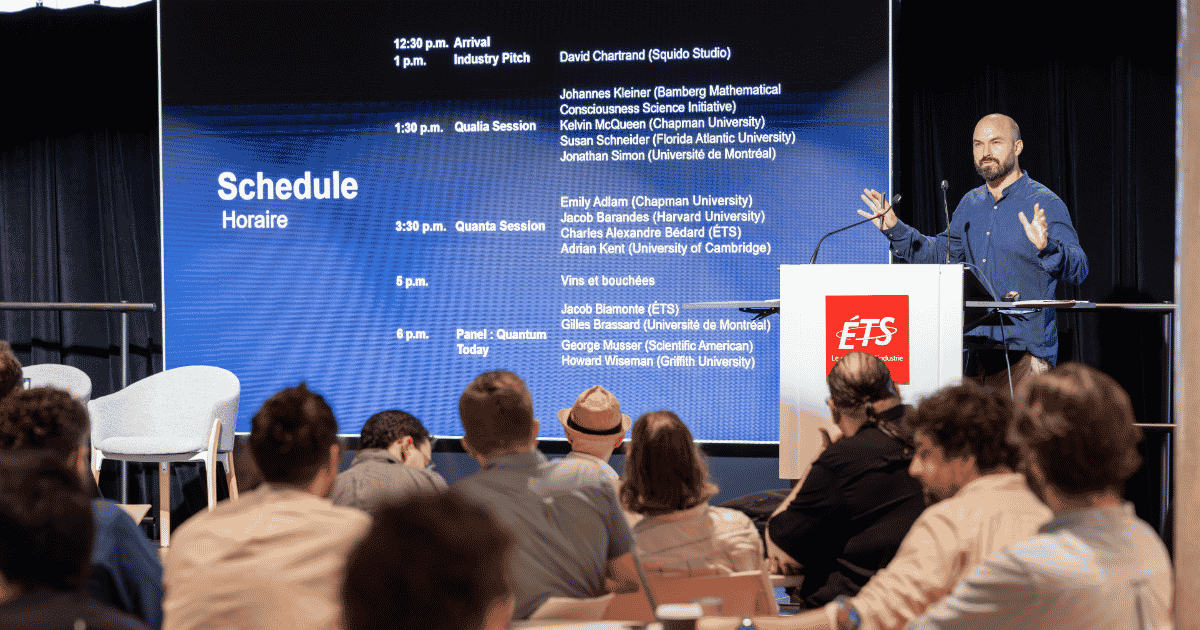
The event was hosted by Charles Alexandre Bédard of ÉTS.
From Industry to Fundamental Questions
The day opened with a presentation by David Chartrand, an entrepreneur whose technological ambitions have led him toward foundational questions.
For him, the rapid progress of artificial intelligence is making the scientific problem of consciousness increasingly urgent: as AI systems become more capable, what, if anything, distinguishes sophisticated information processing from subjective experience?
His perspective illustrated the dialogue between technology and fundamental research at the heart of the event.
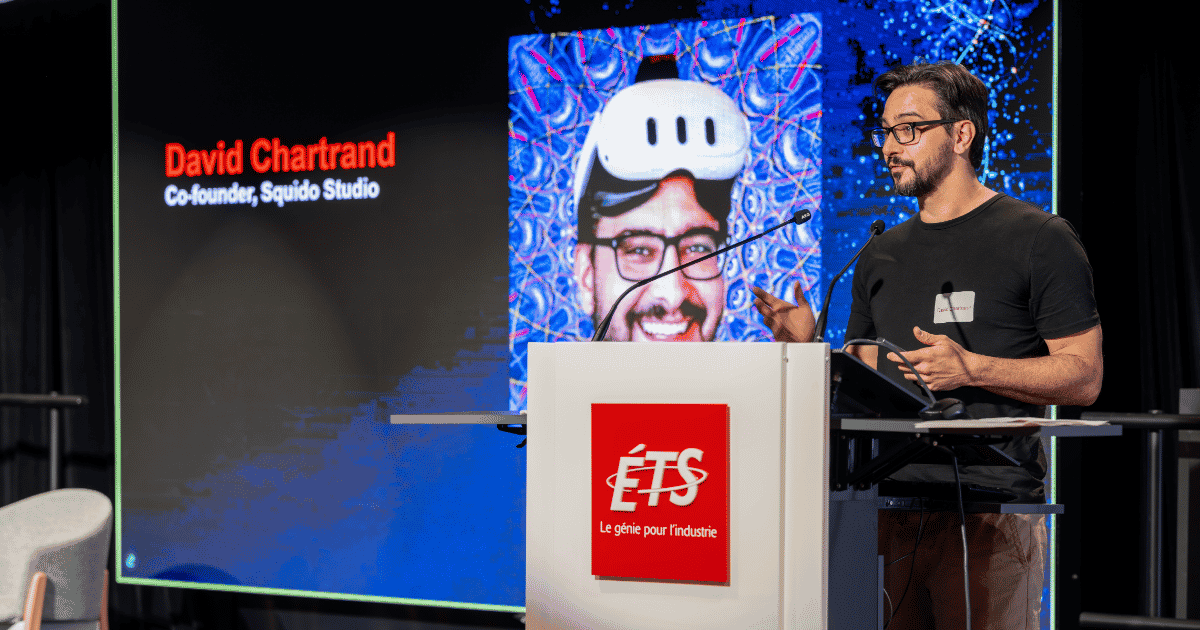
David Chartrand, co-founder and president of Squido Studio and Executive Director of the Center for the Unification of Science and Consciousness (CUSAC)
Qualia: Understanding Subjective Experience
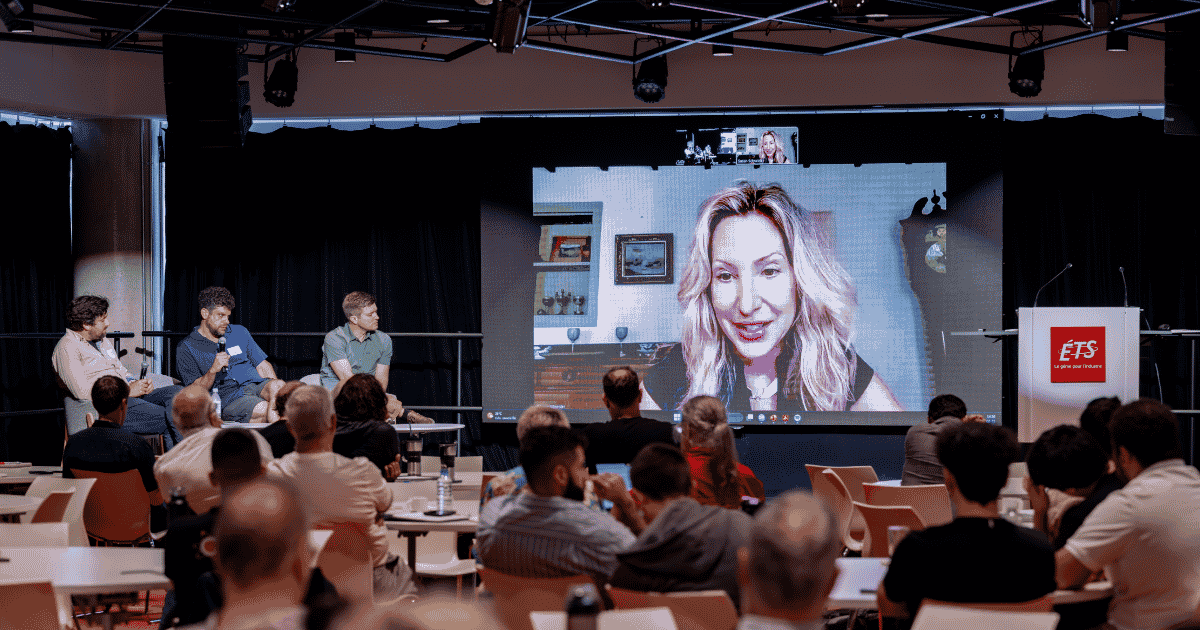
Johannes Kleiner (Bamberg Mathematical Consciousness Science Initiative), Jonathan Simon (Université de Montréal), Kelvin McQueen (Chapman University). Researcher Susan Schneider (Florida Atlantic University) joined the panel remotely.
The first session explored one of science’s great mysteries: how can we understand subjective experience and consciousness
The discussion examined the challenge of explaining subjective experience scientifically, including whether today’s language models could plausibly have conscious experiences and whether mathematics can place limits on possible theories of consciousness.
Quanta: Revisiting the Foundations of Quantum Mechanics
After the break, the discussion shifted to quanta, with a session devoted to the foundations of quantum theory.
At its centre was the measurement problem: the apparent tension between the continuous quantum evolution described by the theory and the very different change traditionally associated with measurement.
The round table then explored several contemporary attempts to rethink the foundations of the theory, from relational descriptions of physical systems to stochastic approaches with memory, and proposals connecting fundamental physics more directly with experience.
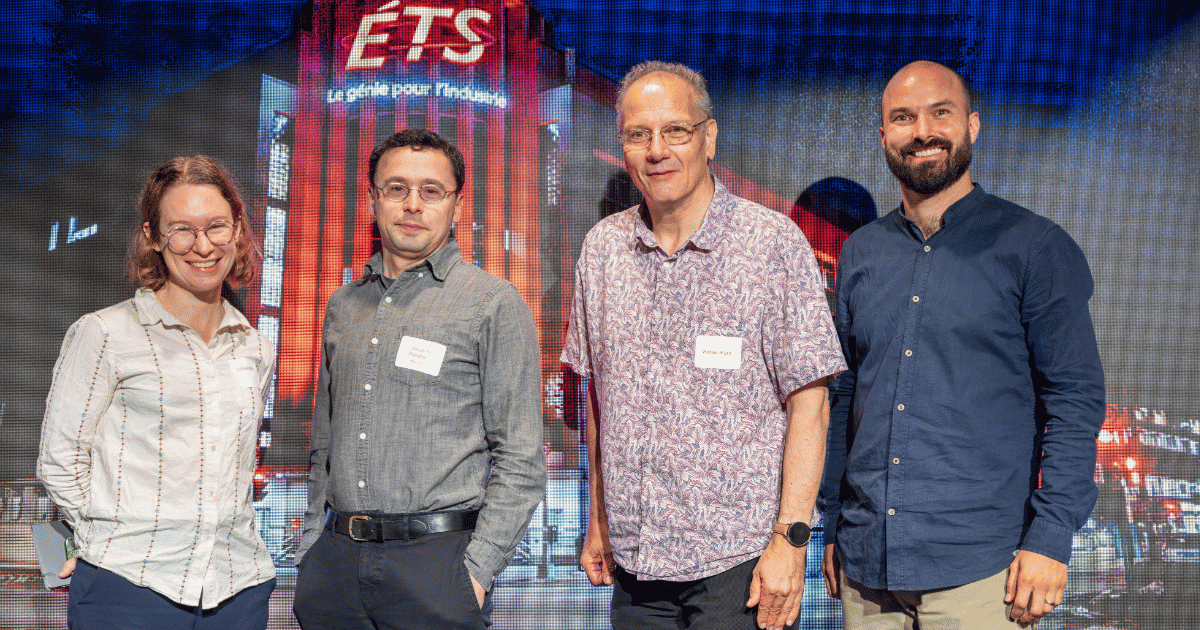
Emily Adlam (Chapman University), Jacob Barandes (Harvard University), Adrian Kent (University of Cambridge), Charles Alexandre Bédard (ÉTS)
Quantum Today: From Theory to Technology
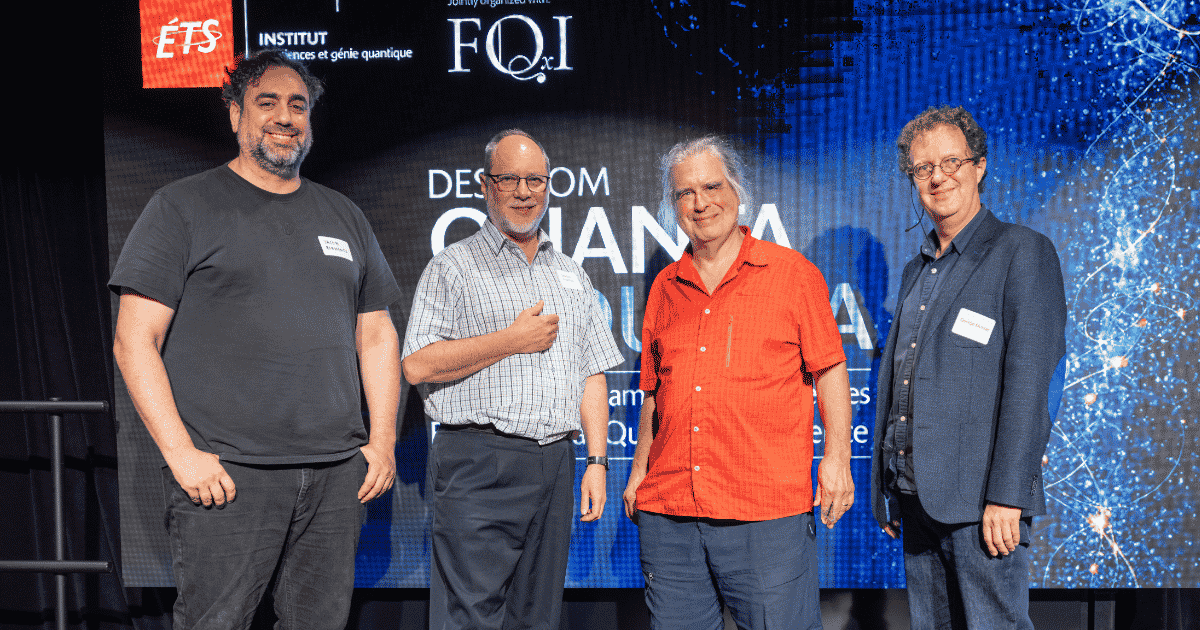
Jacob Biamonte (ÉTS), Howard Wiseman (Griffith University), Gilles Brassard (Université de Montréal), George Musser (Scientific American)
The final major discussion of the day, Quantum Today, turned to issues more directly related to the present and future of quantum technologies.
The discussion traced the path from foundational ideas to practical quantum technologies.
It revisited the unlikely origins of quantum cryptography, and the importance of supporting fundamental research whose applications may only become apparent much later, explored the still poorly understood boundary between classical and quantum computation, and examined modern extensions of Bell’s theorem and Wigner’s-friend thought experiments that continue to test what quantum theory allows us to say about physical reality.
The panel was moderated by George Musser, science journalist and contributing editor at Scientific American.
A Gift to Keep the Conversation Going Beyond the Event
The evening also featured a generous donation to the ÉTS community. Ian Durham of FQxI presented the ÉTS Library with books signed by authors who took part in the event. The books will become part of the Library’s collections, helping extend the discussions sparked during the day beyond the event itself.
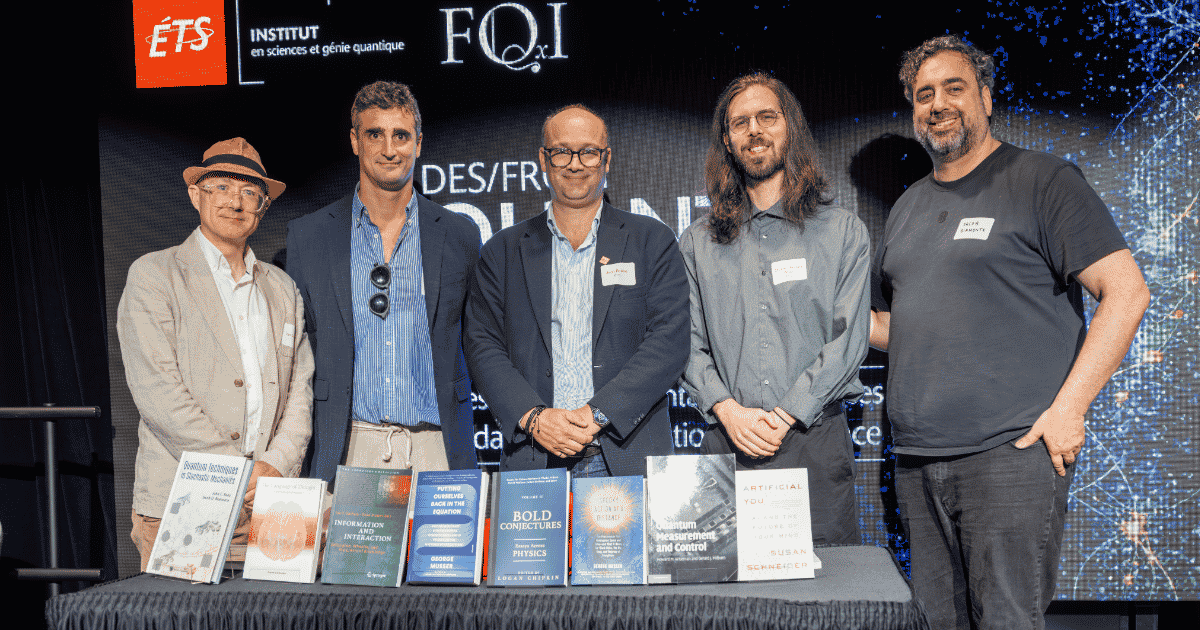
Ian Durham (FQxI), Fabio Anza (FQxI), Jean Belzile (ÉTS), Charles-Antoine West (ÉTS), Jacob Biamonte (ÉTS)
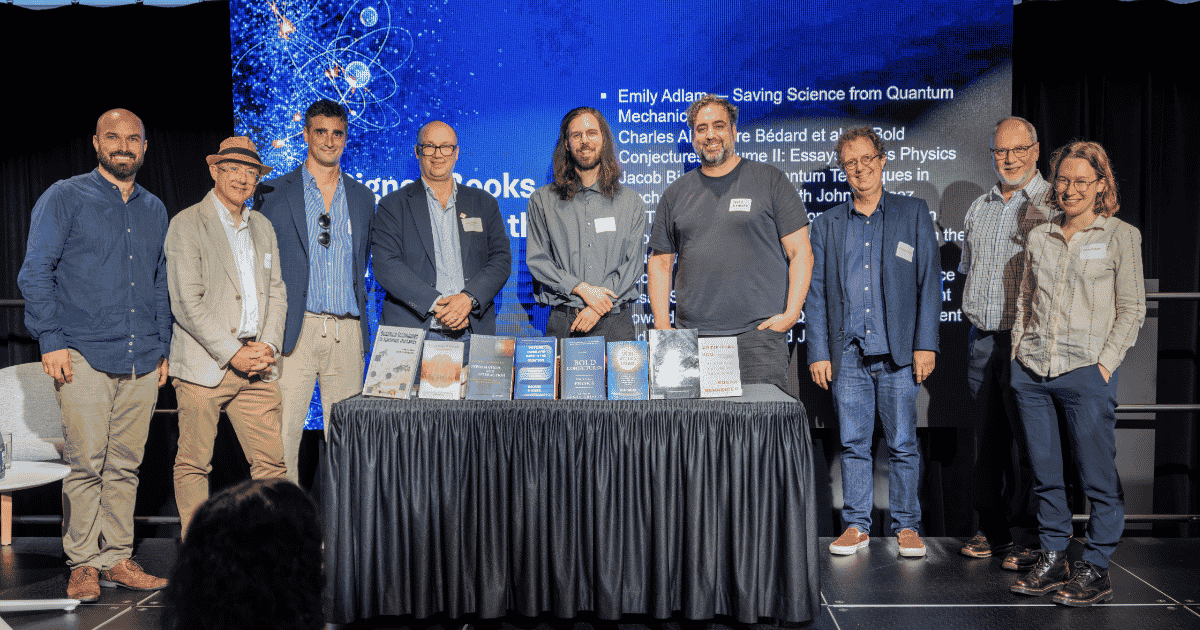
Charles Alexandre Bédard (ÉTS), Ian Durham (FQxI), Fabio Anza (FQxI), Jean Belzile (ÉTS), Charles-Antoine West (ÉTS), Jacob Biamonte (ÉTS), George Musser (Scientific American), Howard Wiseman (Griffith University), Emily Adlam (Chapman University).
Thank You to Our Partners
Beyond its program and discussions, From Quanta to Qualia provided an opportunity to highlight the development of quantum science and engineering at ÉTS.
ÉTS would like to warmly thank FQxI, CUSAC, Squido Studio, Numana, PINQ² , and the Quantum ÉTS student club for their participation and contribution to the success of From Quanta to Qualia. Their collaboration helped bring together this exceptional community and create a space for meaningful exchanges between fundamental research, engineering, industry, and the next generation of students.
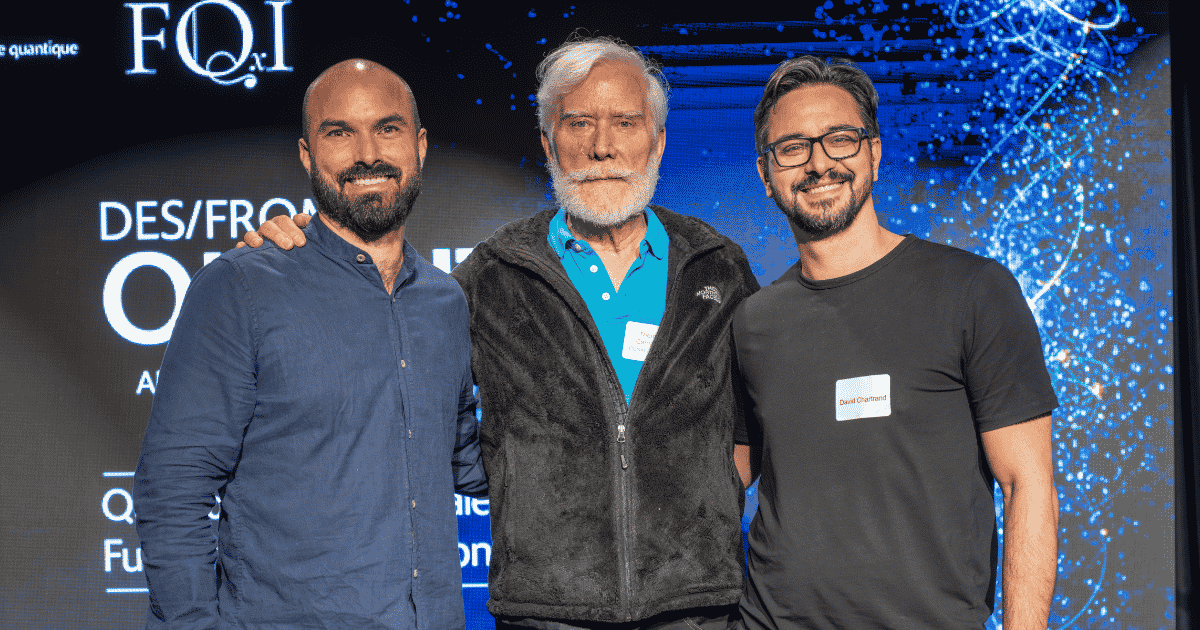
Charles Alexandre Bédard (ÉTS), Tom Campbell (CUSAC), David Chartrand (Squido Studio, CUSAC)