September 21, 2026
A master's student in environmental engineering at the École de technologie supérieure, Lucie Richard-Duclos demonstrates that graduate studies can lead to practical projects with a direct impact on society. For her, a master’s degree can take various forms depending on the university, the research area and the professor advising the project. Some academic paths are more theoretical, while others are deeply rooted in action and social innovation.
Lucie also emphasizes the importance of carefully selecting one’s research environment and talking with professors before committing to a master’s project. In her view, this mentorship plays a vital role in the student experience and in the ability to develop a project that truly aligns with one’s interests and values.
Turning an idea into a concrete solution
As part of her master’s in sustainable development, she worked on an applied project called Rocket Stove, designed in collaboration with community organizations.
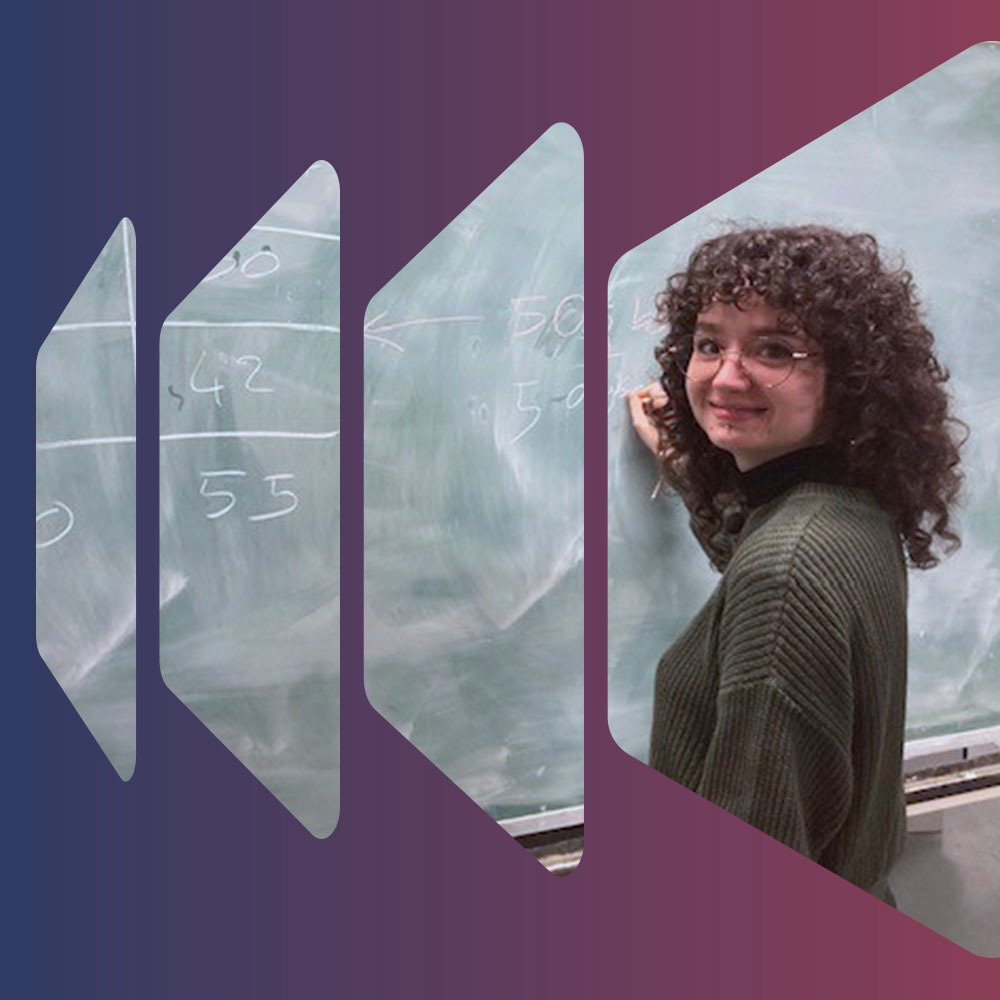
Lucie Richard-Duclos, master's student in environmental engineering at ÉTS
This small low-tech stove is easy to build using accessible materials and provides cooking and heating capabilities for individuals experiencing homelessness. The project’s objective is to offer a safe alternative to the improvised fires sometimes used on the street.
Her research was not limited to a theoretical analysis of the concept. Lucie worked directly with the prototype, tested its operation, and helped refine its design to ensure it met real-world conditions on the ground. The project had to account for numerous issues related to accessibility, safety and available resources. The stove needed to be easy to understand, simple to build and adapted to contexts where access to tools, materials or even literacy may be limited.
Design with safety and frontline needs in mind
Safety considerations were also central to the development of the Rocket Stove. For example, specific design choices aimed to reduce the risk of injury when handling materials such as tin cans. Once extinguished, the stove can also be stored inside a tent, reducing the risk of fires and carbon monoxide poisoning.
Research engaged with communities
This social innovation and sustainable development research project led Lucie to collaborate closely with community organizations, notably RAPSIM. Discussions with frontline workers helped her better understand the real needs of those affected and adapt the proposed solutions to their daily reality.
This approach reflects the low-tech philosophy, which aims to design simple, sustainable and accessible solutions to meet basic needs. Before developing a technology or an object, one must first understand the social and environmental issues to be addressed.
A career focused on the ecological and social transition
Lucie’s academic journey reflects this commitment to contributing to the ecological and social transition. Building on her background in science, engineering and environmental energy, she turned her focus at ÉTS to topics such as the circular economy, the social economy and the socio-ecological transition.
When graduate studies open up new possibilities
Today, her research experience is already opening doors to new professional ventures. Through her research supervisor, Philippe Terrier, she was connected with an initiative to renovate historic brick houses near Concarneau, France. The project aims to create a co-living space dedicated to low-tech living, where residents share gardens, workshops and collective projects focused on sustainable lifestyles.
In the longer term, this initiative hopes to give rise to a neighbourhood designed entirely around the ecological transition, where housing, local production and community initiatives operate in synergy. For Lucie Richard-Duclos, this experience demonstrates that academic research and graduate studies can lead to concrete achievements that transform communities and deliver a tangible impact on society.