November 2, 2026
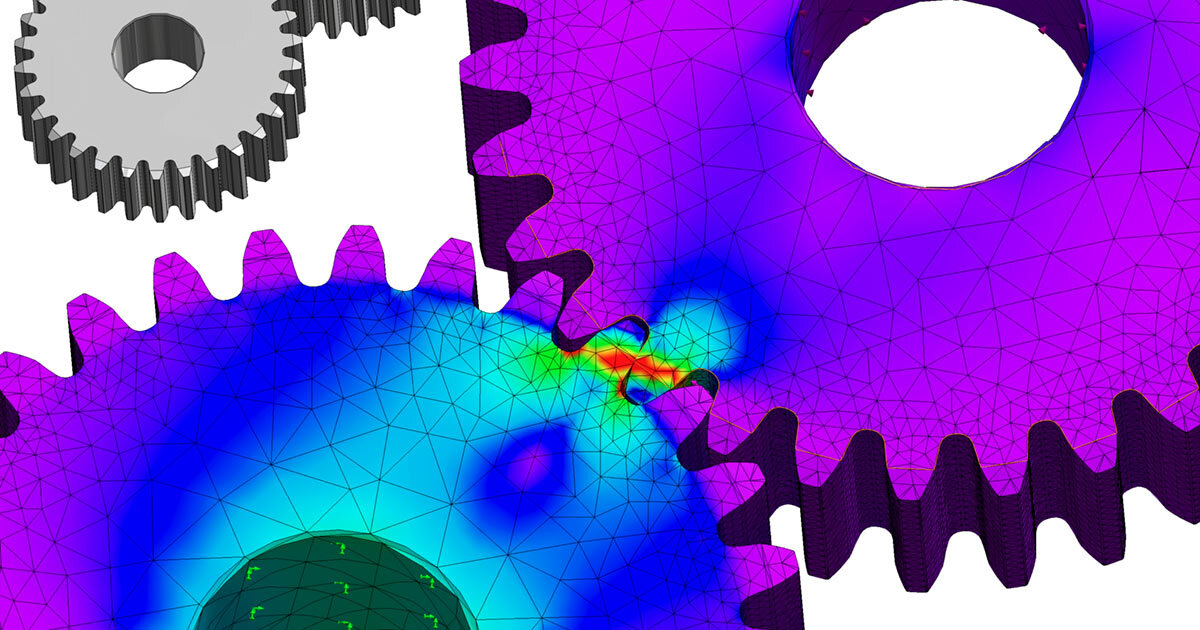
When two mechanical parts come into contact, they rub against one another, wear down, heat up, vibrate, and lose energy. These phenomena, often invisible, affect the performance and service life of mechanical systems.
To gain a better understanding of and control over these phenomena, Professor Raynald Guilbault, of the Department of Mechanical Engineering at ÉTS, focuses on tribology. This science, which encompasses contact, friction, wear, and lubrication, aims to reduce energy loss and extend the service life of components.
“The entire mechanical system relies on contact,” he summarizes. “All forces are transmitted through contact.”
Reducing energy loss
Friction and wear account for approximately 23% of global energy consumption. Improving contact between surfaces therefore offers considerable potential for energy savings and greenhouse gas emission reductions.
Raynald Guilbault is focusing on gears. Even with an efficiency of over 98%, loss becomes significant when a system must transmit several megawatts, as in the case of a wind turbine.
To reduce the loss, he is studying surface texturing. Tiny cavities can alter lubricant behaviour, support part of the load, and reduce direct contact between surfaces. But their size, shape, and arrangement must be carefully optimized: poorly designed texturing can increase friction and wear.
The researcher develops numerical models and optimization algorithms, including genetic algorithms, to determine the most efficient configurations.
Adaptive surfaces
Raynald Guilbault is currently focused on the development of smart materials that adapt naturally to operating conditions while reducing friction, wear, and energy loss simultaneously.
Predicting wear
His models are not only used to improve components during manufacturing; they also serve to predict their behaviour throughout their useful life.
For gears, Raynald Guilbault models wear progression, vibrations, and failure risks. He is looking for configurations that remain effective over time, not just when new.
This approach also has applications in high-voltage electrical cables, whose strands wear down from repeated micro-friction. He is currently developing smart clamps that can detect a strand break and send an alert, thereby reducing the need for costly inspections.
By combining tribology, systems dynamics, modelling, and numerical optimization, Raynald Guilbault seeks to make machines more efficient, more reliable, and more durable. A better understanding of mechanical contacts also leads to better designs for tomorrow’s machines.