September 14, 2026
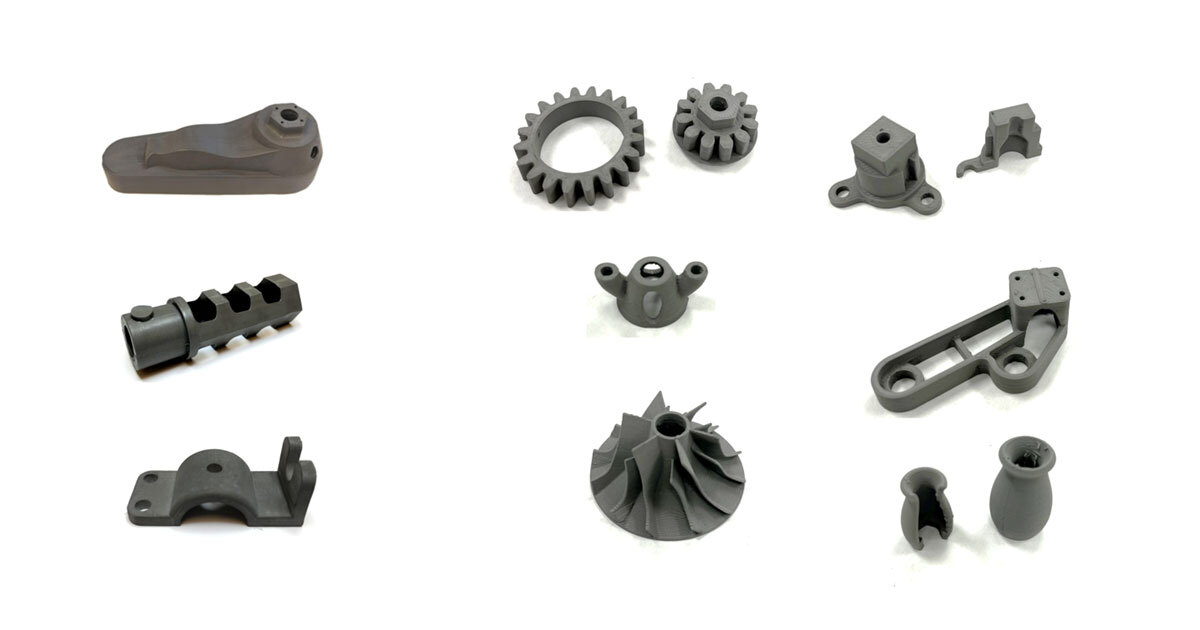
In the aerospace industry, engine parts are complex in shape, exhibit high strength, and able to withstand high temperatures. But materials that meet these requirements are often difficult to machine, and traditional manufacturing processes have their limitations.
Metal injection molding (MIM) offers an attractive solution. Capabilities of the process include fabrication of complex geometries from materials that are difficult to machine or forge, while also providing them with excellent strength. However, this technology presents a significant challenge: during manufacturing, the part can shrink by nearly 20%. And accurately predicting this shrinkage is no easy task.
Working specifically on this issue is ÉTS Professor Vincent Demers, from the Department of Mechanical Engineering and the Department of Aerospace, and holder of the Pratt & Whitney Canada Research Chair in Advanced process and characterization of aerospace parts. His work aims to make the MIM process more accessible for small-batch production and to use 3D printing to accelerate component development.
An effective process, but costly to develop
The MIM process is especially well-suited for small metal parts with complex shapes. Metallic powder is mixed with a polymer binder and then injected into a mould. After molding, the binder is removed (debinding), and the part is heated to a very high temperature during sintering. The metal particles then gradually diffuse, and the pores close to form a microstructure similar to that of forged parts.
In this final stage, the part undergoes significant shrinkage. The manufacturer must therefore anticipate this phenomenon as early as the mold design phase.
Indeed, each geometry behaves differently during sintering, which may require several mold iterations before the desired dimensions are achieved. Since each mold can cost tens of thousands of dollars and take several months to develop, these successive trials can quickly become time-consuming and costly.
3D printing of powders to avoid costly trials
This is where the second process in the professor's research comes into play: 3D printing via material extrusion, or MEX.
The MEX process uses the same type of powder-binder mixture as MIM. Rather than injecting the material into a mold, a printer deposits it layer by layer to form the part.
The goal is not necessarily to replace MIM. It is primarily to enable rapid prototyping and to quickly test a geometry before manufacturing a mold.
A part can be printed in about fifteen minutes. Several variations of the same geometry can thus be produced and then subjected to debinding and sintering processes. Their shrinkage can then be measured, and these results can be used to develop the material laws required to determine more accurately the dimensions of the future mold.
This approach has the potential to transform a portion of the process development—which currently relies on costly testing—into a much faster experimental process.

ÉTS Professor Vincent Demers
Understanding what happens inside the part
MIM and MEX do, however, have one thing in common: the final part depends significantly on what happens during debinding and sintering stages.
While the mechanical properties already exceed 90% of those of forged parts, porosity, oxides, or other microstructural defects can reduce their strength and impair their in-service performance.
Therefore, Vincent Demers and his team are working to accurately characterize the produced parts and understand the relationship between manufacturing conditions, their microstructure, and their mechanical properties.
New furnaces with capability to replicate industrial conditions are currently in the final stages of commissioning at ÉTS. They will be able to adapt atmosphere during heat treatment to control the physicochemical reactions on the surface of the powders, which is essential for optimizing microstructures.
Ultimately, the goal is to better control the process to produce dense metal parts that meet the aerospace industry requirements.
Vincent Demers’s work aims to optimize these processes to meet the needs of advanced manufacturing: producing complex, high-strength parts in small quantities from materials that are difficult to shape, while minimizing costs and development times.