September 21, 2026
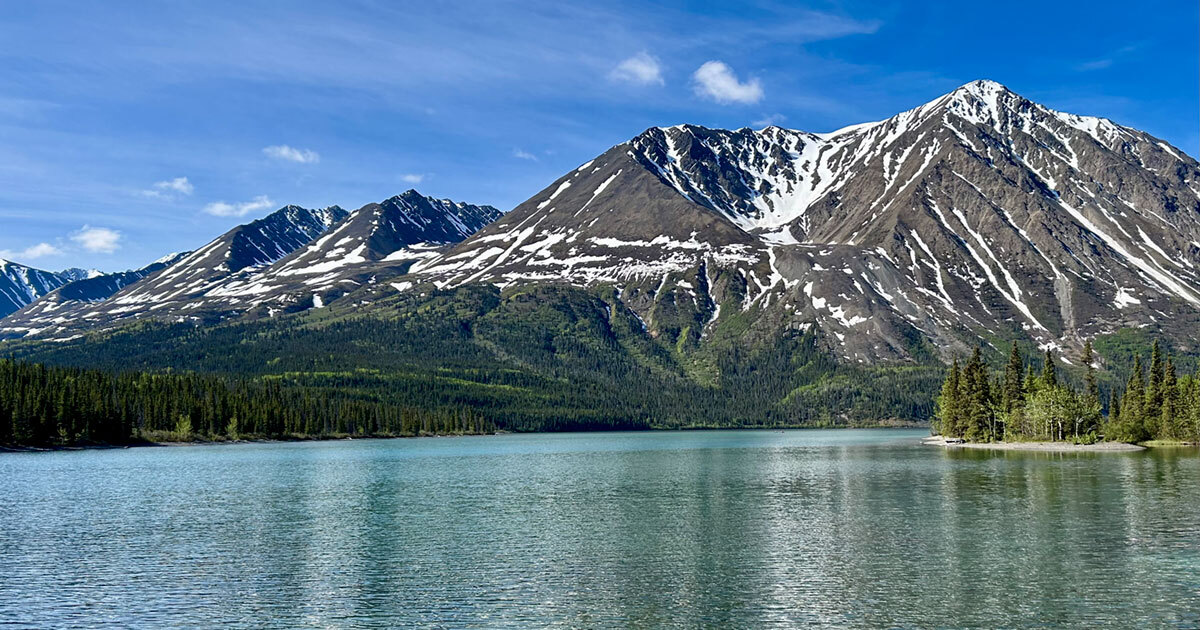
Kathleen Lake, on the lands of the Champagne Aishihik Firsts Nations, in Kluane Lake National Park and Reserve.
Around the world, alpine glaciers are retreating rapidly, and the mass loss is accelerating. In many mountainous regions, the retreat is now occurring fast enough that the disappearance of most small glaciers within this century has become the most plausible scenario. Yet, their disappearance does not merely signify the loss of a mass of ice. These glaciers play a key role in the very structure of the mountain water cycle: they feed rivers and lakes, regulate interactions with groundwater, and influence where water is stored or transferred. As the ice disappears, this hydrological architecture also changes, sometimes in ways that are not visible from the surface.
These hidden transformations, the indirect links between glaciers and downstream water resources— are the focus of ÉTS professor Michel Baraër, who studies water resources in cold regions. His work has taken him to the Yukon mountains, at the foot of glaciers in the Saint Elias Mountains. After spending the last ten years studying the behaviour of the glacier and its recently deglaciated forefield, his team is now focusing on another question: what happens to this water as it continues its journey beneath the surface?
The hidden part of glaciers
Research by Michel Baraër in the Yukon has revealed massive quantities of ice buried in the proglacial zone of a watershed in the St. Elias Mountains. It shows that in these environments, the disappearance of visible ice does not necessarily mean the immediate disappearance of all the ice left behind by the glacier. When a glacier retreats, rock debris can cover some of the ice that remains beneath the surface. This buried ice can then persist much longer than the visible ice. And it continues to play an important role in water circulation.
“Water cannot pass through the massive ice. It must therefore flow over or under it,” explains the researcher.
When water seeps under the ice, it can penetrate deep into the bedrock, especially through fractures. Some of the water that disappears this way from surface waterways continues its journey underground. This phenomenon partly explains why researchers sometimes observe a significant discrepancy between the amount of water produced upstream and the amount measured further downstream in a watershed.
Buried ice acts, in a sense, as an underground barrier that influences the path of water. It, too, will eventually disappear, but much more slowly than ice exposed to the air. Insulated by debris, it melts mainly as rainwater seeps into the ground and carries the heat accumulated in the rocks.
The result is a highly complex hydrological system, where some of the water is diverted underground by buried ice masses, invisible from the surface and destined to disappear. Consequences of this transformation on downstream water resources remain difficult to quantify.
From the mountains to salmon lakes
Understanding how this buried ice controls groundwater recharge is therefore key to determining where meltwater goes and how its underground redistribution might, over time, alter the water supply to ecosystems and communities that depend on this water downstream of the glaciers.
In collaboration with Champagne and Aishihik First Nations (CAFN), Michel Baraër and his team are now seeking to determine whether water that seeps into the ground upstream in the watersheds eventually resurfaces further downstream and helps replenish the lakes in the traditional territory, particularly those where salmon come to spawn. This issue is important to the communities involved. Salmon play a central role in their diet and culture, and for several years now, the community has observed changes in both the quantity and quality of salmon returning to the rivers. They also have concerns about certain pollutants present in the water.
“We have observed very significant changes upstream, near the glaciers. We believe these changes are also impacting downstream ecosystems. The time has come to study the connections between the two,” explains Michel Baraër.
Until now, researchers have studied water flow near glaciers, a few kilometres downstream from their study sites. They are now focusing on watersheds covering tens of square kilometres to understand how upstream changes affect downstream lakes. This shift in scale also draws on the long-standing knowledge and observations of the Champagne and Aishihik First Nations, who are helping to identify the environments, changes, and priority issues to be studied.
The team will track the water's journey from the base of the glaciers to the lakes to understand the various paths it takes. They will combine CAFN’s knowledge and observations with field observations, geochemical analyses, geophysical imaging, drone-based remote sensing, and hydrological modelling.
The goal is not to conduct an exhaustive study of the lakes’ environmental quality, but rather to understand how changes in water circulation can alter the characteristics of the water that feeds them.
Several water sources feed the lakes, and their characteristics and proportions vary over time. The team seeks to better understand the contribution of groundwater of glacial origin to this inflow and determine the extent to which it helps maintain cold and relatively stable conditions in certain salmon lakes.
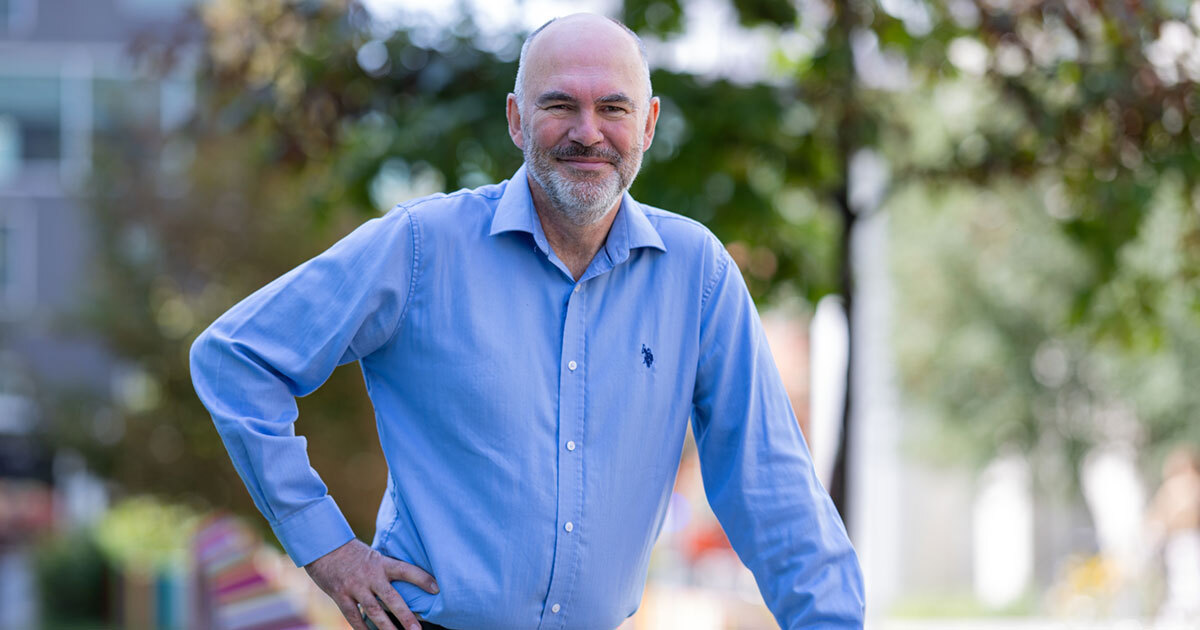
ÉTS Professor Michel Baraër
When snow becomes a risk factor
Still, glaciers are not Michel Baraër’s sole topic of study. Another part of his research focuses on snowpacks and episodes of rain on snow, especially at the Sainte-Marthe campus.
Climate change is altering the characteristics of the snowpack and, consequently, the way it stores and releases water. When a large mass of moist air, an “atmospheric river”, for example, brings 50 millimetres of rain to a snowpack, this can act as a brake and retain some of the water. But under certain conditions, it can also accelerate runoff by adding water from melting snow to the rain.
As a result, 50 millimetres of rain can potentially yield an even greater volume of water reaching waterways.
In winter, this situation can lead to massive ice jams. When the flow swells enough to break through the layer of ice covering a river, large blocks of ice can be carried by the current to a bridge or a bend in the river. Then, if the temperature drops, the blocks can freeze together and form a localized ice dam.
These episodes, which were once less frequent, are expected to become a growing cause for concern as the frequency and intensity of winter rainfall increase.
Preparing engineering for the changes ahead
Whether it’s disappearing glaciers or winter rivers facing heavier rainfall, Michel Baraër’s research follows a common thread: understanding how climate change is transforming water flow in cold regions.
The complexity of the processes highlighted by Michel Baraër and his team reminds us that, despite technological advances, fully anticipating the consequences of climate change remains out of reach.
For Michel Baraër, this reality gives engineering a vital role.
“With climate change, we’re playing with fire. Some consequences are already emerging even before we fully understand the mechanisms that cause them. This is especially true in regions experiencing glacial retreat, where the effects of retreating glaciers can extend far beyond the glaciers themselves. Ultimately, our society will have to drastically reduce its impact on the environment, especially its carbon emissions.”
This is precisely where engineering education must make a difference. Understanding large-scale complex systems, anticipating their transformations, designing adaptation solutions, and driving the transition to a low-carbon society will require engineers capable of working at the interface of technology, the environment, and society.
At ÉTS, this approach is reflected in the development of a new environmental engineering program aimed at training a new generation of specialists capable of addressing challenges that, in the years ahead, can no longer be ignored.