July 23, 2026
Whether it’s managing Quebec’s forests sustainably, streamlining port operations, reducing emissions in the mining sector, or customizing home delivery routes, the challenge is the same: How to make the best decisions within complex systems where everything is interconnected?
This question guides the work of Mustapha Ouhimmou, Professor in the Department of Systems Engineering at ÉTS. His research focuses on the optimization, design, and management for more efficient, resilient, and sustainable supply chains
To this end, his team combines advanced optimization and simulation tools with, increasingly, artificial intelligence.
Envisioning the future of forests over a 100-year horizon
For nearly 25 years, the forestry sector has been one of the main areas of research for Mustapha Ouhimmou.
Sustainable forest management is a highly complex challenge, involving multiple stakeholders: governments, forestry companies, local communities, and First Nations. Added to this are the effects of climate change, insect infestations, and the industry’s future needs.
Researchers are especially interested in a fundamental question: What decisions made today will help preserve the forest for long term? The models being developed consider rotation of forest stands, harvesting, preventive treatments, and natural disturbances.
Among the threats studied is the spruce budworm, an insect that cause significant damage to boreal forests. Thanks to artificial intelligence and data accumulated over the years, it is now possible to predict the onset, spread, and severity of infestations with a high degree of accuracy. These forecasts are then used to implement targeted interventions such as spraying and preventive harvesting.
The goal is the same: to ensure the long-term health of forest ecosystems while maintaining the economic viability of the communities that depend on them.
More efficient ports thanks to digital twins
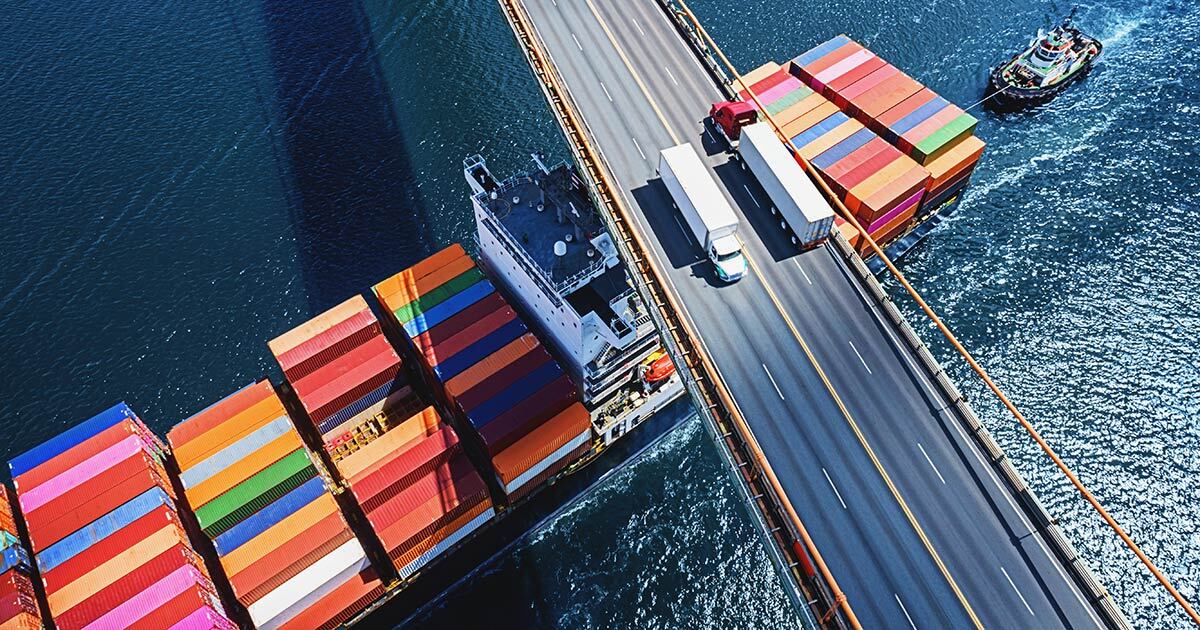
Port operations are another key area of application for Professor Ouhimmou’s research. In collaboration with the ports of Montréal and Trois-Rivières, his team is developing digital twins models simulating daily operations. The goal is to optimize ship loading and unloading, better coordinate transfers between different transportation modes, and reduce congestion.
These tools are known as digital twins, i.e. highly realistic virtual representations of port facilities. At this point, it would be more accurate to call them “digital shadows,” since these models are still used primarily to test scenarios rather than directly control operations.
They do, however, help answer very specific questions: What would happen if more cargo were transferred to rail? How much time could be saved by reorganizing some operations? What would be the impact on greenhouse gas emissions?
These issues are crucial; ports are often located near residential neighbourhoods, where reducing noise, air pollution, and traffic congestion is a priority.
Supporting the energy transition of organizations
For several years now, Mustapha Ouhimmou has also been focusing on decarbonizing industrial activities, namely in the mining sector. The goal is to help organizations gradually replace their diesel-powered equipment with cleaner solutions, such as electric vehicles.
But this transition goes far beyond merely purchasing new equipment.
Since mines are often located in remote areas not connected to the power grid, local energy production must be planned using wind farms, solar panels, and battery storage systems. It is also necessary to provide a charging infrastructure, train the workforce on new equipment, and adapt daily operations without compromising production goals.
Researchers then conduct life-cycle analyses to assess environmental impacts and develop transition plans that enable companies to achieve carbon neutrality gradually. Optimization thus becomes a roadmap to guide long-term decisions.
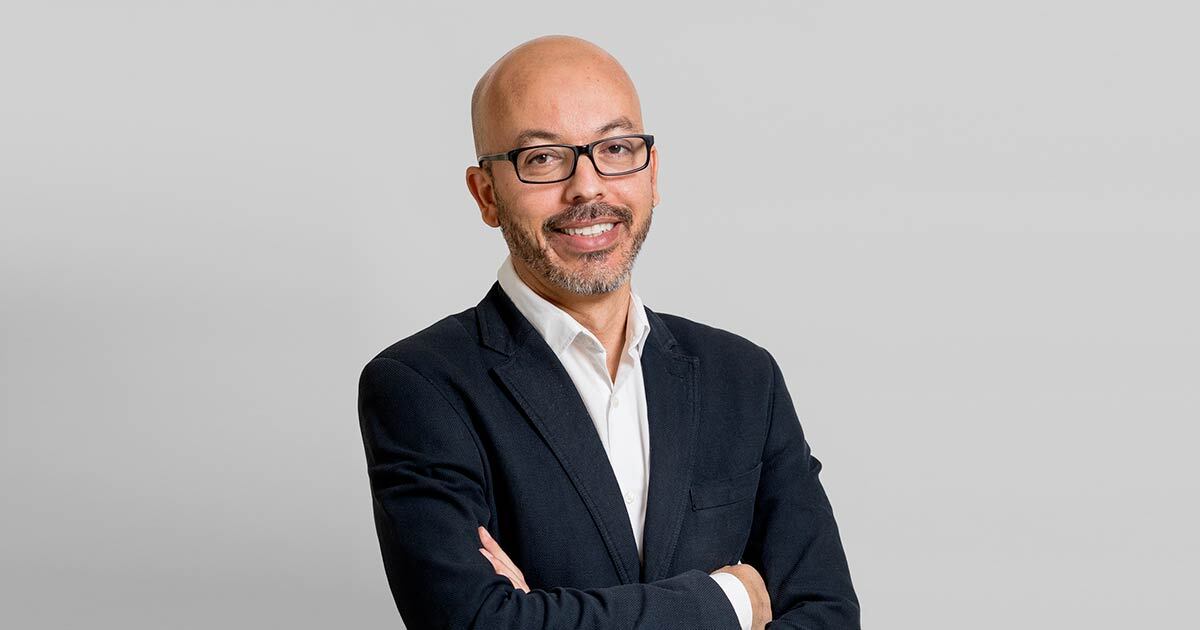
ÉTS Professor Mustapha Ouhimmou
Reinventing last-mile delivery
E-commerce has profoundly transformed consumer habits, but this shift comes with significant logistical challenges.
Last-mile delivery—the final leg between the distribution center and the customer’s home—is often the most costly and polluting stage of the process. To improve efficiency, Mustapha Ouhimmou combines artificial intelligence with optimization to customize driving routes.
The idea is simple: rather than imposing standardized routes that drivers might alter on their own, researchers analyze work habits based on historical data. Artificial intelligence then identifies behavioural patterns and suggests routes tailored to each driver’s preferences. As a result, drivers are more likely to follow the routes, and operations become more efficient.
The challenge is greater because activity varies enormously depending on the time of year. Peak periods, such as the holiday season, bring a dramatic increase in the number of packages being delivered. The models must therefore be flexible enough to adapt to these fluctuations.
Anticipating the future for better action today
Despite the diversity of the sectors studied, a common thread runs through all of Mustapha Ouhimmou’s work: using data to inform today’s decisions while taking tomorrow’s consequences into account.
By combining optimization, simulation, and artificial intelligence, his research contributes to the development of smarter supply chains in support of business competitiveness while accelerating the transition to a more sustainable economy.
For behind each delivery, each managed forest, and each metric ton of goods passing through a port lies the same ambition: to make better decisions today toward building a more resilient future.