March 25, 2026

What does a lotus leaf have to do with aerospace engineering? “For me, nature is an endless source of inspiration,” says Gelareh Momen, Professor of Aerospace Engineering at ÉTS. She mentions lotus leaves, which remain dry even in torrential rain, carnivorous plants capable of trapping prey thanks to their oily micro/nano surface, and shark skin, with its drag-reducing microstructures. Engineering cannot surpass nature, but it can imitate it.
An expert in surface engineering, the researcher uses a biomimetic approach in developing anti-icing, anti-corrosion, and self-repairing materials suitable for industries such as aerospace and energy.
From Chemistry to Aviation
Originally from Hamadan, one of Iran's oldest cities, young Gelareh Momen followed in the footsteps of her parents, both university professors. She chose chemical engineering because she saw it as offering great opportunities for innovation. Gelareh earned her bachelor's degree in chemical engineering from Sharif University of Technology in Tehran in 1999, followed by a master's degree in chemical engineering from Tehran Polytechnic University in 2003. She then pursued a PhD in process engineering at Paris XIII University, which she completed in 2006.
Wishing to settle with her family in a French-speaking country, where her expertise could be recognized, Gelareh Momen chose Quebec. She completed her postdoctoral fellowship at the University of Quebec in Chicoutimi (UQAC), where she then held a position as professor and researcher for four years. In 2016, after a few years at Bombardier Aerospace, she rejoined the UQAC faculty and founded the Laboratory for Ice-Repellent Coatings and Surface Engineering (LaRGIS). Since 2020, she has been the scientific director of the Anti-Icing Materials International Laboratory (AMIL) and applies her expertise in industrial partnerships across various sectors.
In 2023, she was appointed to the Institutional Research Chair in Innovative Anti-Icing Materials (CiMAGI).
In a country where winter conditions, amplified by climate change, are accelerating the deterioration of infrastructure and equipment, advances in the field of smart coatings come as a welcome relief.
Collaborating With Major Quebec Companies
Bombardier, Pratt & Whitney, Bell, Hydro-Québec, Montreal Airport, and several other companies have expressed a keen interest in Gelareh Momen's research. The Department of Defense recently called on the researcher's expertise to speed up the de-icing process for helicopters deployed on emergency missions in remote areas. “The photothermal coating I created stores energy and heat during the day, which makes it easier to de-ice aircraft,” explains Ms. Momen.
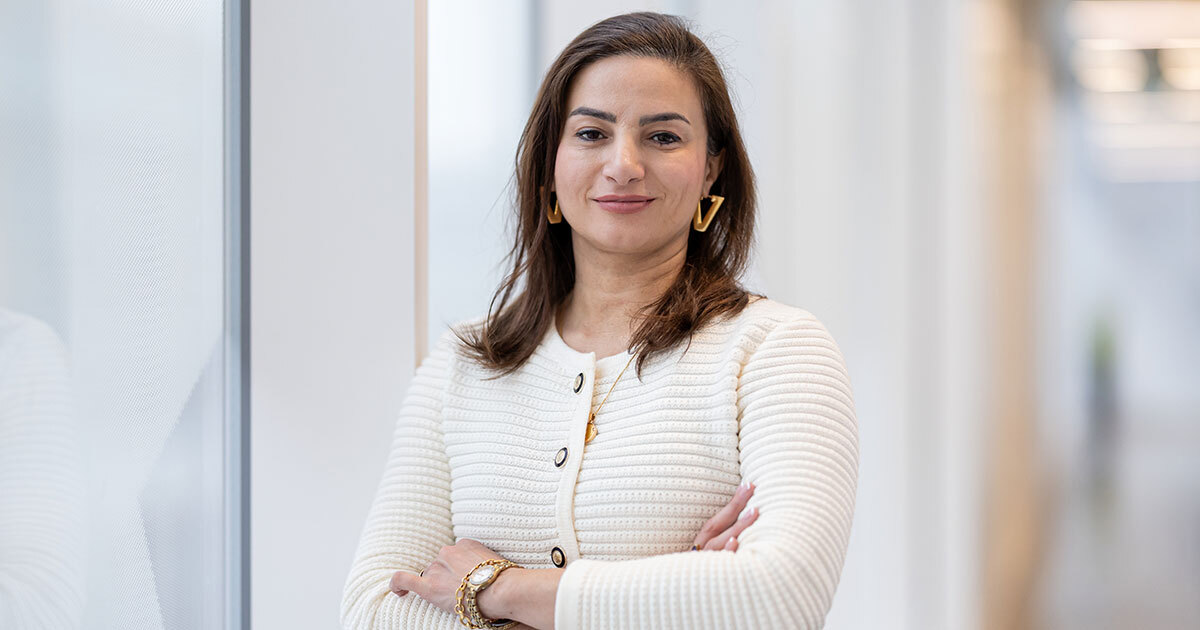
ÉTS Professor Gelareh Momen
She won the prestigious Massoud Farzaneh International Award in 2024 for her outstanding achievements in the field of overhead electrical network engineering. This award highlights her contribution in a field where women have historically been underrepresented. She is now among the top 2% of most cited academic scientists in the world.
Research and Teaching, an Inseparable Duo
Professor Momen has designed several courses at the University of Quebec in Chicoutimi, including one in northern engineering, which allowed her to integrate her research work. More than fifty postdoctoral, doctoral, and master's students have benefited from her guidance.
In May 2025, Gelareh Momen accepted a position as Professor in the Department of Aerospace Engineering at ÉTS. This new department welcomed its first cohort of students in September. This is the kind of challenge that appeals to Gelareh.
Observe, Verify, Innovate
For several years, the scientist has been devoting her research to self-repairing materials, attempting to replicate the biological healing process. “Microcapsules we incorporate into the coating release repair agents when a crack appears on the surface of a polymer,” explains Ms. Momen.
“Everything in nature can become a teaching tool, and I am an excellent student,” concludes Gelareh Momen.