April 8, 2026
At PolymerETS, Research Professor Nicole Demarquette designs polymer systems with novel properties by combining different substances and controlling their structure at the microscopic level. This approach allows the creation of materials that can perform very specific functions, such as detecting physical phenomena or the controlled release of active molecules.
This research, part of a Tier 1 Canada Research Chair in rheology for the development of new thermoplastic-based blends and composites, resides primarily within the field of materials engineering. However, several technologies developed by Professor Demarquette research team could find applications in healthcare, notably in drug delivery systems, biomedical devices or sensors.
Designing materials with custom properties
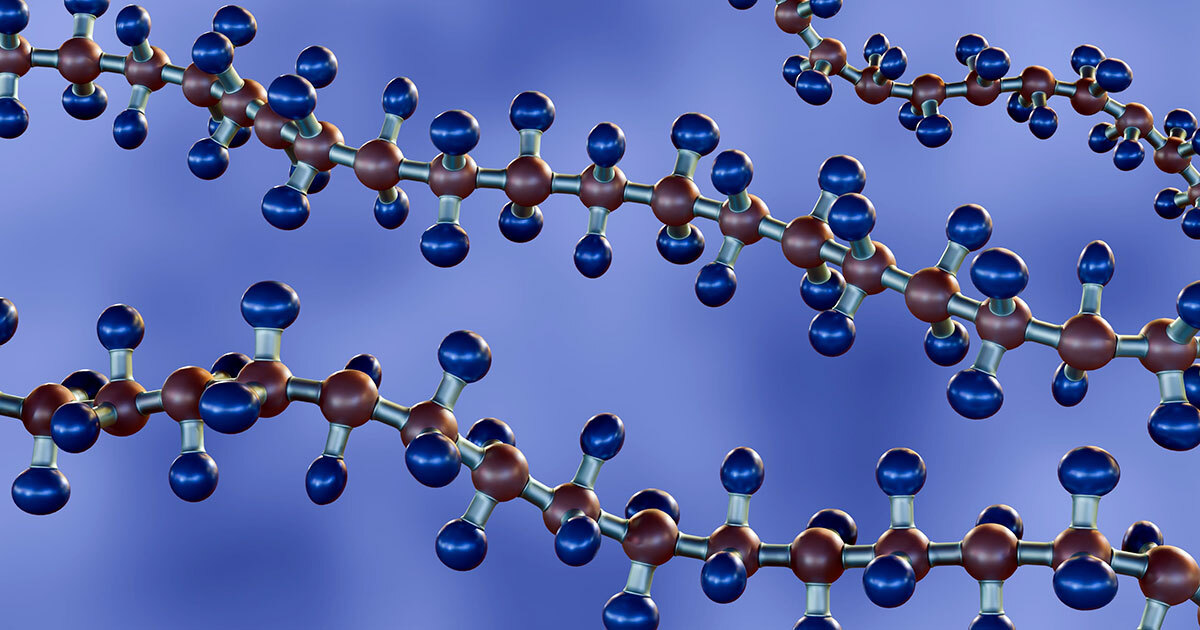
Polymers are materials composed of long molecular chains. The plastics we use every day, like plastic bags and rigid packaging, are the best-known examples, but they can also form the basis for far more sophisticated materials.
Nicole Demarquette has a special interest in thermoplastic polymer-based blends and composites. The goal is to combine different polymers—some of which can be chemically modified—or to incorporate functional particles into them to achieve specific properties.
But composition alone is not enough. The final properties of a material depend largely on its microscopic structure, or microstructure.
For example, simply put, when electrically conductive particles are added to a polymer, the material will become conductive only if those particles come into contact with one another and form a continuous network. If they remain scattered and isolated, no current will flow.
This arrangement depends on many factors: the chemistry of materials, interactions between the different phases, and processing conditions.
To understand and control these phenomena, the professor draws on rheology, the science of complex fluid flow. Studying the behaviour of polymers as they flow makes it possible to predict how the different phases will organize themselves during manufacturing and, consequently, what properties the material will possess.
The materials developed in the laboratory can then be shaped using various techniques, such as extrusion, fused extrusion in additive manufacturing, or electrospinning—a method to produce membranes made of extremely fine fibres.
Environmentally responsive polymers
In recent years, a significant portion of Nicole Demarquette’s work has focused on so-called “stimulus-responsive” polymers. These materials react to certain environmental conditions, such as temperature or pH.
In these polymers, the molecular chains can fold in on themselves or, conversely, unfold completely, depending on environmental conditions. This reconfiguration can be used to capture or release active molecules, such as drugs.
This makes it possible to design materials that can deliver a treatment only when certain physiological conditions are met.

ÉTS professor Nicole Demarquette
Improving medication delivery
Tuberculosis treatment is a specific example. In a study on clay-reinforced polymers, the team demonstrated that it was possible to control the adsorption and release of isoniazid, an antibiotic used to treat this disease.
With this type of material, the drug could be protected as it passes through the stomach and is released further down the digestive tract—in the intestine, for example, where the pH is different.
This principle of controlled drug release is a very active area of research, offering the potential to improve the effectiveness of treatments while reducing their side effects.
In another exploratory project, the team is working on a natural polymer called pullulan, a biocompatible polysaccharide. The researchers are attempting to modify the polymer chemically to make it glucose-responsive.
The goal is to develop a hydrogel that can detect sugar and release insulin when the concentration is too high. This material could be implanted subcutaneously and function as an autonomous glucose regulation system.
Although this line of research is still in its early stages, it demonstrates the potential of these materials to interact with biological environments.
Materials for wound treatment
Pullulan could also be used to fabricate membranes for wound treatment. Chemically modifying this polymer could lead to the development of materials that can gradually release therapeutic agents, such as antibiotics or anti-inflammatory drugs.
These membranes can be produced using electrospinning to create highly porous nanofiber networks or through biofabrication and 3D printing. The resulting structures could be tailored to specific requirements, notably porosity, elasticity, or drug release rates.
Sensors embedded in materials
Another area of research at the laboratory focuses on developing polymer sensors.
To create these sensors, the researchers incorporate various functional particles into polymers, including electrically conductive particles such as graphene and carbon nanotubes, as well as hybrid structures known as metal-organic frameworks (MOFs). These structures combine metals and organic molecules and exhibit a strong chemical affinity for specific compounds. When incorporated into polymers, they allow the development of materials that can detect various substances or physical stresses.
For example, one ongoing project is to develop a strain sensor integrated into a hockey or football helmet. Manufactured using 3D printing, this material reportedly contains conductive particles that can measure impact forces and help improve the detection of concussion risks.
Other studies are exploring the use of these materials to detect pollutants in water or volatile organic compounds emitted during fires.
Understanding for better design
Despite the wide range of these applications, they all rely on the same scientific principle: controlling the microstructure of materials to tailor their mechanical, electrical, thermal, or functional properties.
In Nicole Demarquette’s laboratory, this approach involves three key steps: material formulation, morphology control, and the development of new functionalities.
By exploring interactions with polymers, nanoparticles, and advanced manufacturing processes, Professor Demarquette and her team are helping to develop a new generation of materials that can interact with their environment—and potentially play a significant role in tomorrow’s medical technologies.
Nicole Demarquette is a member of itechsanté, the ÉTS research institute for innovation in health technologies. To learn more about the institute, its mission, themes, flagship projects, and more, visit itechsanté