February 17, 2026
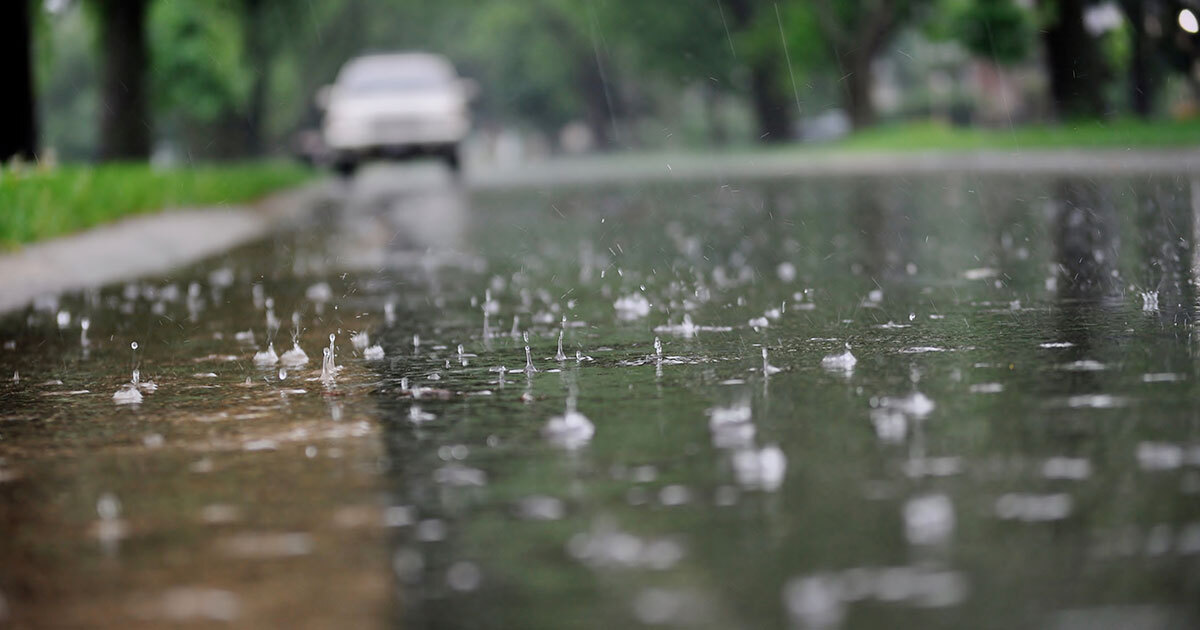
Flooded basements, sewer backups, streets turned into rivers: extreme rainfall events are increasingly highlighting the limitations of urban infrastructure. For ÉTS Professor Jean-Luc Martel, these problems are not isolated anomalies but rather symptoms of a built environment historically designed for a climate that no longer exists.
Holder of the FRQ-AdapT Chair in resilient management of urban and rural runoff, which he co-directs with Professor Mathieu Lapointe (ÉTS) and Nathalie Tufenkji (McGill), Jean-Luc Martel is primarily interested in one fundamental question: how can we adapt the built environment to future climate extremes?
When infrastructure can no longer keep up
The current challenges associated with stormwater are largely due to the historical design of urban infrastructure. Until the mid-2000s, design focused primarily on underground sewer pipes, sized to handle relatively intense rainfall events, typically associated with return periods of around 5 to 10 years. Surface runoff, predominant when sewer capacity is exceeded, was not explicitly taken into account in the design of drainage networks.
This imbalance has led to the implementation of systems that can function adequately during frequent rainfall events, but are inherently vulnerable during more intense events associated with return periods of 50 to 100 years. When sewer capacity is exceeded, excess runoff flows over the surface without following clearly defined paths, accumulating in topographic depressions, and causing the urban flooding and sewer backups we see today. Climate change is amplifying this dynamic by increasing both the intensity and frequency of these events.
The dual drainage principle, which explicitly recognizes the complementary roles of the underground network and surface runoff, has become a more widely accepted practice in recent years. However, in many existing neighbourhoods, particularly older areas, surface runoff is hampered by existing urban development, making the necessary adaptations for resilience to extreme events complex and costly.
Shifting from a reactive mindset to a planned approach
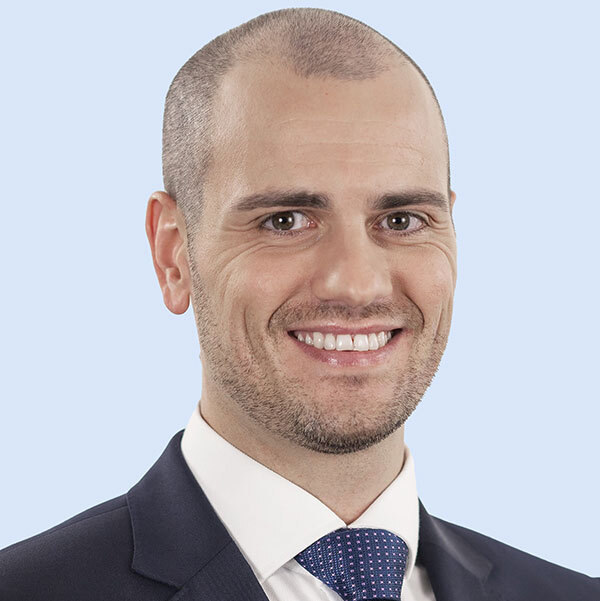
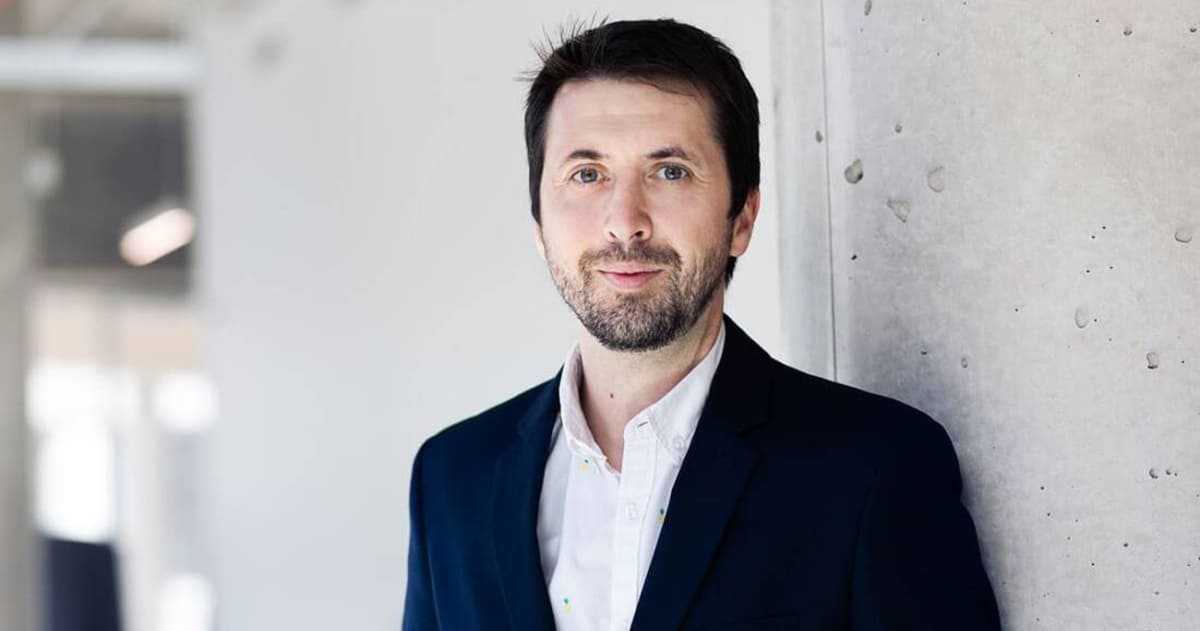
ÉTS Professor Jean-Luc Martel
Jean-Luc Martel is working to help municipalities move from ad hoc, often reactive interventions to structured stormwater management planning that explicitly incorporates climate change.
By combining recent claims data, topographical information, and hydrological and hydraulic modelling, his team is identifying the most vulnerable areas: Where does water accumulate? Where are the topographic depressions located? The goal is to target priority sectors and analyze which intervention strategies yield the best results.
Retaining water as close as possible to its source
A key principle that emerges from this work is to retain water as close as possible to where it falls, because once it reaches the topographic depressions, it is often too late.
In public areas, this can take the form of sponge parks, permeable pavement, bioretention cells, or vegetated curb extensions. These blue and green infrastructures reduce and delay runoff volumes, while offering additional benefits: reduction of heat islands, increased biodiversity, and improved living environment.
On private property, citizens can also contribute, for example by creating rain gardens, disconnecting gutters, or temporarily retaining water on flat roofs. Interventions carried out upstream of a topographic depression can thus significantly reduce the volumes sent to the most vulnerable areas.
Helping cities make the right choices
Municipalities have limited budgets, but a wide range of options: oversized pipes, underground basins, blue and green infrastructure, etc. Not all of these solutions offer the same performance or benefits.
Jean-Luc Martel and his team develop multi-criteria decision-making tools that incorporate technical, environmental, social, and economic criteria. Their research shows that solutions such as bioretention, sponge parks, and rain gardens can offer superior overall performance, compared to traditional gray infrastructure, when all their benefits are taken into account.
Densification and future climate
Urban densification is putting increased pressure on already aging water networks. In collaboration with municipalities and research partners, Jean-Luc Martel and his team are working to better prioritize interventions, and integrate climate projections into the design and rehabilitation of future urban water infrastructure.
With a strong focus on practical application, the aim of these research projects is to empower cities to invest and plan more effectively and, ultimately, make the built environment more resilient to extreme rainfall events, which can no longer be considered as strictly exceptional.