October 15, 2026
The invisible armour on your screen
We have all dropped a smartphone and worried about a cracked screen. When the screen survives, it’s thanks to a specially treated glass. Glass like Gorilla Glass uses a clever method to reinforce these very thin screens so they can survive occasional drops.
The glass is soaked in a hot bath of molten salt at over 400 °C. During this soak, smaller Alkali ions in the glass (i.e., Na+) are exchanged for larger ones (i.e., K+). Think of it as packing a suitcase to the brim. This stuffing effect creates a deep, micron-scale pressure layer that pushes inward. This invisible armour holds the glass atoms tightly together and stops tiny flaws from growing into large cracks.
Speeding up time to test the glass
While this armour is great at surviving drops, how does it hold up against slow damage from the elements? From the high heat of a car dashboard to heavy moisture and bright sunlight, outdoor exposure degrades materials over time.
To find out whether exposure weakens this type of glass, researchers at the ÉTS Laboratory of Smart & Circular Manufacturing tested Gorilla Glass 3 by accelerating its aging process. They placed the glass in a special test chamber (Figure 1) and exposed it to intense ultraviolet (UV) light, high heat of up to 95 °C, and high moisture of up to 60% for 30 to 300 hours. This allowed the team to analyze years of real-world degradation in just a few days. Although this method does not exactly replicate natural aging, it provides a valuable rough estimate. This approach helps researchers understand long-term degradation mechanisms that are impossible to observe through standard testing. permet ainsi de mieux comprendre les mécanismes de dégradation à long terme impossibles à observer dans le cadre d’essais standards.
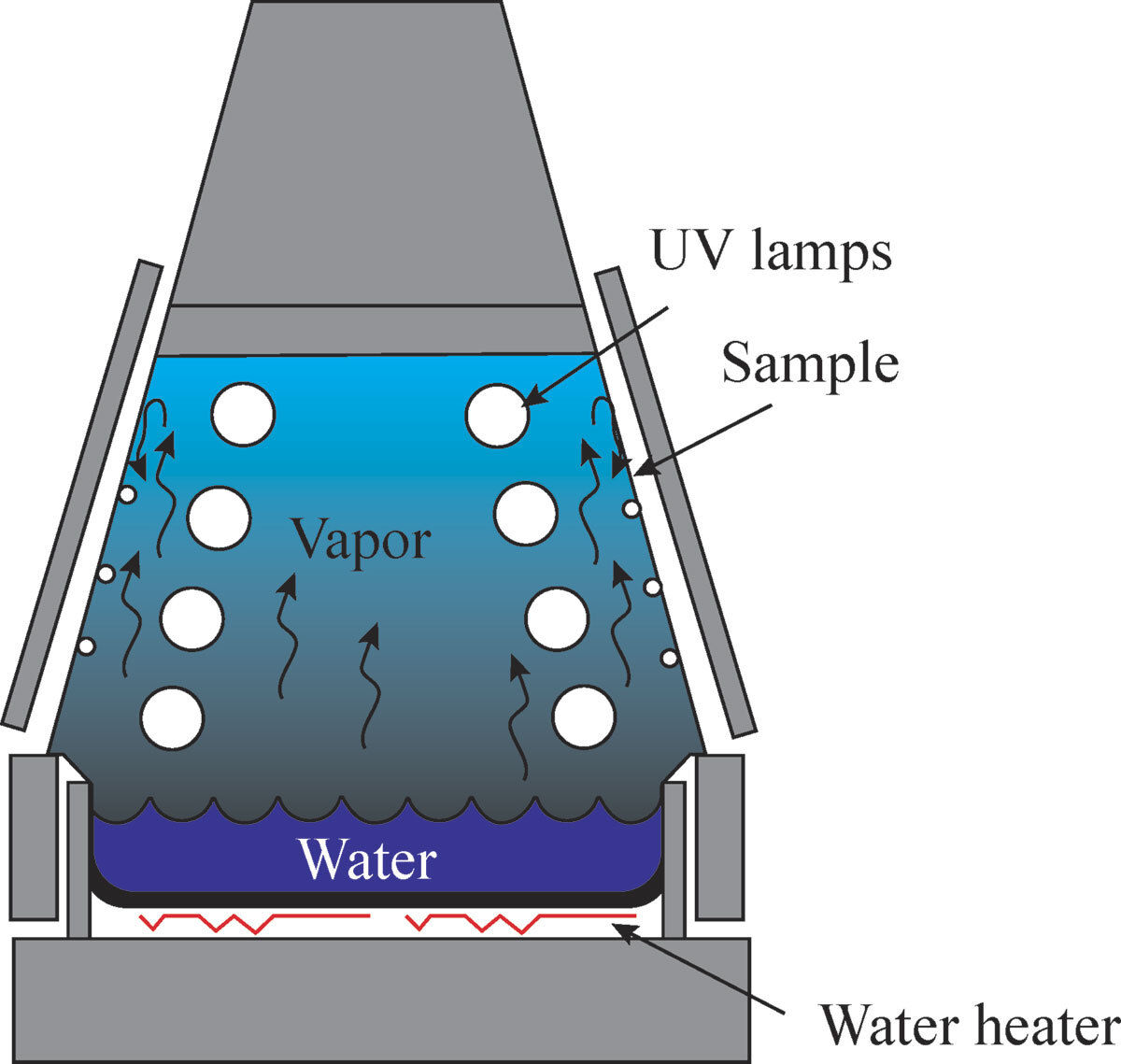
Figure 1: Special testing box used to simulate rapid weathering (Adapted from Delbari & Hof, 2026, CC BY 4.0).
A smoother but hazier surface
The results showed a surprising twist. The weathered glass became smoother on a very tiny scale, but it also became slightly cloudy. When high moisture and heat interact with the glass, water reacts with the surface material. This acts like a tiny polishing process in two ways (Figure 2). First, the sharpest microscopic peaks on the surface actually dissolve faster than the flat areas. Second, the glass absorbs water and swells slightly. The dissolving action melts away the sharp peaks, while the swelling fills in the tiny valleys, leaving the surface much smoother overall.
However, this same reaction creates a spongy layer on the very top of the glass. This layer, which is usually less than 50 nm thick, is thousands of times thinner than a human hair. The tiny holes in this sponge-like layer trap and scatter light, especially blue and UV light. This is based on the same scientific principle that makes the sky look blue. Because of this scattered light, the glass became a little less clear, creating a faintly cloudy look.
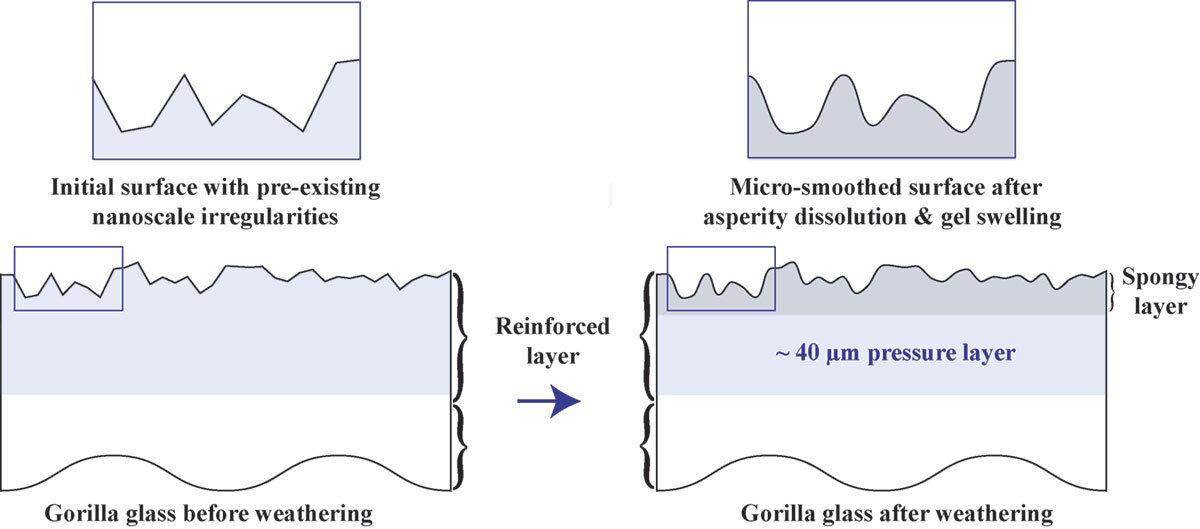
Figure 2: Drawing showing how weathering changes the glass (Adapted from Delbari & Hof, 2026, CC BY 4.0).
An unbreakable armour
Yet the most important question remained: did weathering weaken the glass? To test the glass’s strength, the researchers dragged a diamond-tipped tool across the surface. They applied increasingly strong pressure to see when the glass would scratch or crack. Even with its slight cloudiness and the tiny holes caused by water attack, the glass remained very strong.
Glass types like Gorilla Glass use a clever method to reinforce these very thin screens so they can survive occasional drops. Its secret lies in the depth of the original protective armour. Weathering only affected a very thin top layer of the glass. But the protective layer of pressure, around 50 µm deep, is nearly 1000 times deeper than the damage. This thick layer completely blocked any flaws caused by weathering. Simply put, the surface got a little worn down, but the deep layer of armour held strong and stopped cracks from spreading.
Future outlook: From smartphones to self-driving cars
For everyday smartphone users, this is great news. Your screen will still survive weathering even if you take it to the beach or leave it in a hot car. This also shows that these glass materials have a long lifespan, which makes it easier to recycle old electronics and reduce waste.
However, this slight loss in clearness is a crucial detail for future technology. While the human eye might not detect a 1% decrease in glass clarity, advanced sensors definitely will. For example, self-driving cars rely on laser systems to see the road, and medical professionals use very sharp displays to diagnose diseases. In these advanced uses, even the slightest cloudiness from weathering could disrupt laser signals or make images harder to read.
By understanding exactly how and why this glass breaks down, engineers can now estimate its lifespan. This helps them design better and tougher materials for the electronics and vehicles of the future.