
Canada Research Chair in Water Resources and Environmental Protection
About the Chair
The Canada Research Chair in Water Resources and Environmental Protection is responsible for developing innovative water treatment technologies to protect our water resources and adapt our infrastructure to meet today’s and tomorrow’s environmental challenges.
Research Objectives
- Develop new and advanced aggregation processes to improve the capacity of drinking and waste water treatment plants.
- Create sustainable infrastructure and passive processes for treating runoff and drainage water to protect water resources.
- Develop new functionalized materials to remove emerging contaminants and meet new environmental standards.
- Intercept various key contaminants (nutrients: P, N, and K) in urban and agricultural waste waters.
Anticipated Outcomes
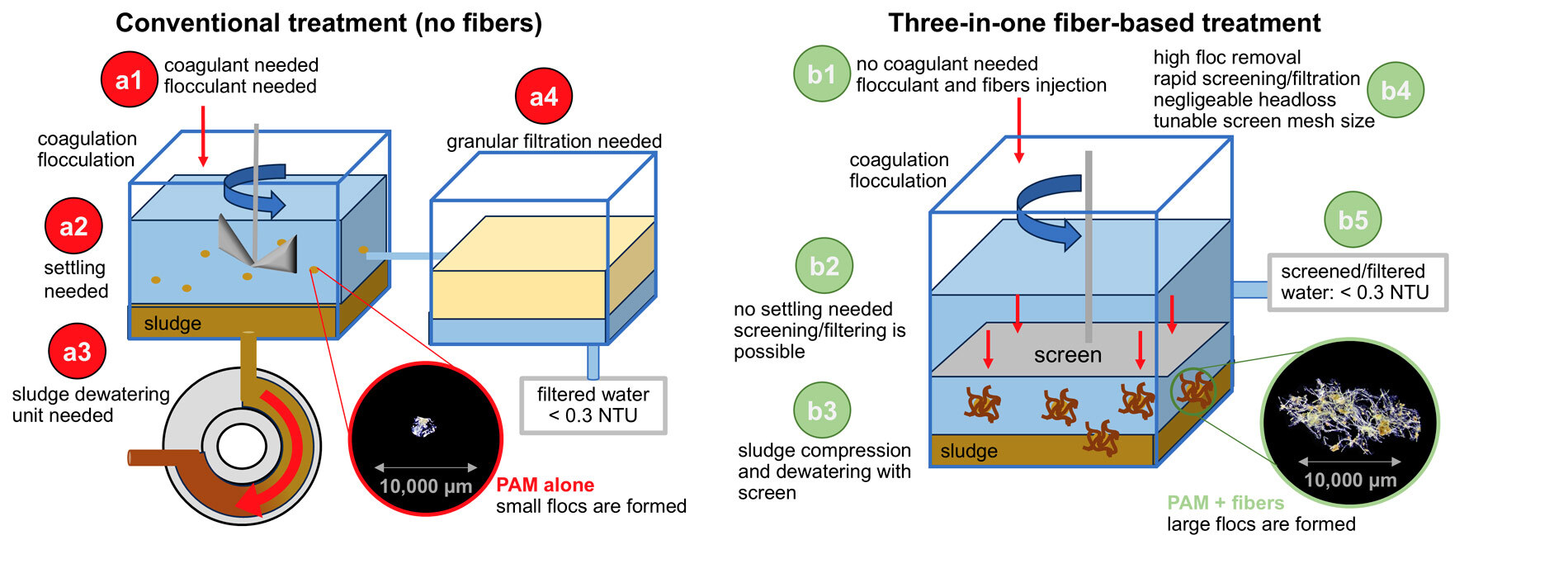
Our technologies, combining advanced aggregation, sedimentation, and filtration, are expected to:
- Remove more standard and emerging contaminants from urban and agricultural waters.
- Limit the environmental impact of cities and agriculture on aquatic biodiversity.
- Protect our drinking water sources.
- Reduce the environmental footprint and cost of water treatment technologies.
Contaminant removal improvement using functionalized fibers
About the Chairholder
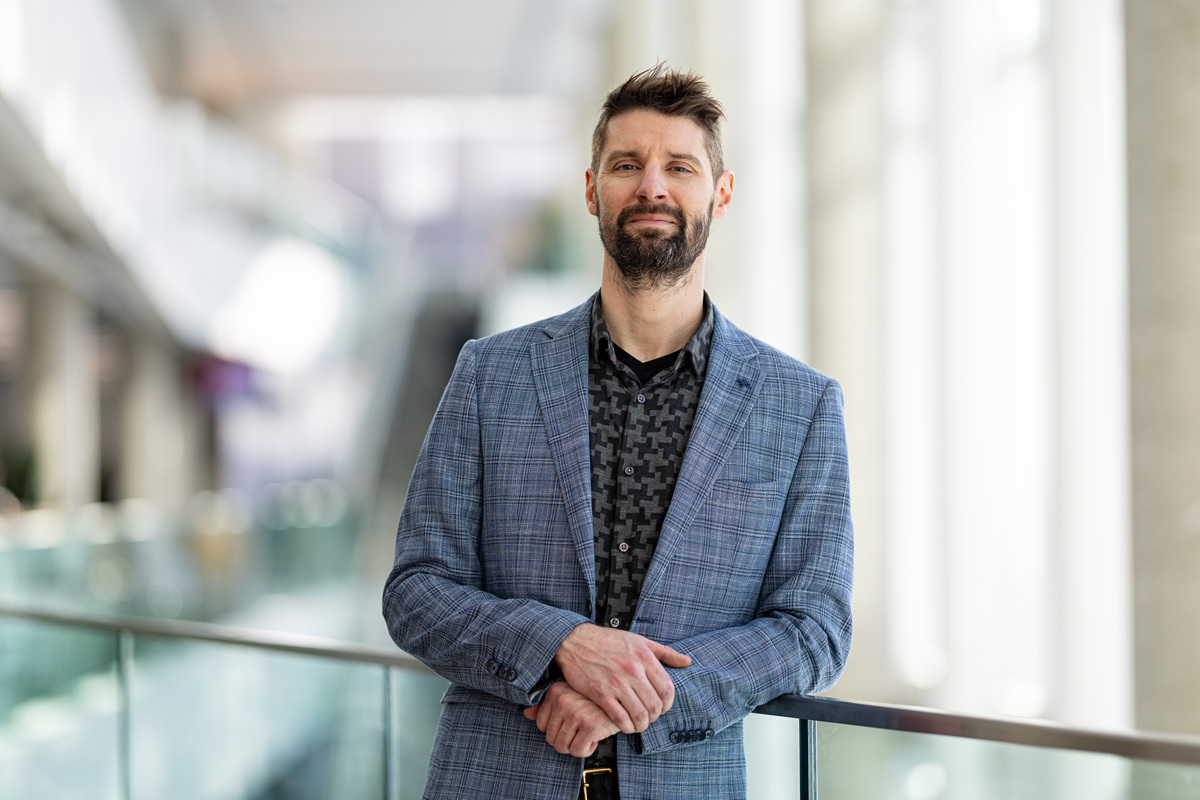
Professor Mathieu Lapointe has unique expertise in Canada in the fields of the environment, water management, and public health. His work has been published in prestigious scientific journals, including Nature Sustainability and Nature Water and has led to a number of patents. These innovative technologies will make it possible to remove more emerging contaminants (including microplastics, nanoplastics, PFAS, etc.) and help cities and agriculture adapt to climate change.
Professor Lapointe is also the Director of the Water Engineering and Environmental Processes Laboratory (LGEPE) at ÉTS. His proposed areas of research in water management are still largely unexplored and are ripe for significant innovation. Meanwhile, cities, industries, and the agricultural sector are in dire need of highly qualified personnel (HQP).
His research group is already a world leader in the field of water management.
Team
The Chair is supported by a talented research team to advance its innovations, including:
- More than 20 master’s, doctoral and postdoctoral students;
- A research associate;
- Two research assistants.
Our activities take place in the laboratory and in the field with our partners (treatment plants, agricultural fields).
Partners
We collaborate with several key players in Canada :
- Ministère de l’Environnement, de la Lutte contre les changements climatiques, de la Faune et des Parcs
- Ministère de l'Agriculture, des Pêcheries et de l'Alimentation
- Ministère de l'Économie, de l'Innovation et de l'Énergie
- Montréal
- Longueuil
- Victoriaville
- Kemira
- Soleno
- Fournier Industries
Contact us
Canada Research Chair in Water Resources and Environmental Protection
1100 Notre-Dame Street West, Montreal, Quebec
Room: A-2637
Email: mathieu.lapointe@etsmtl.ca
Research at ÉTS
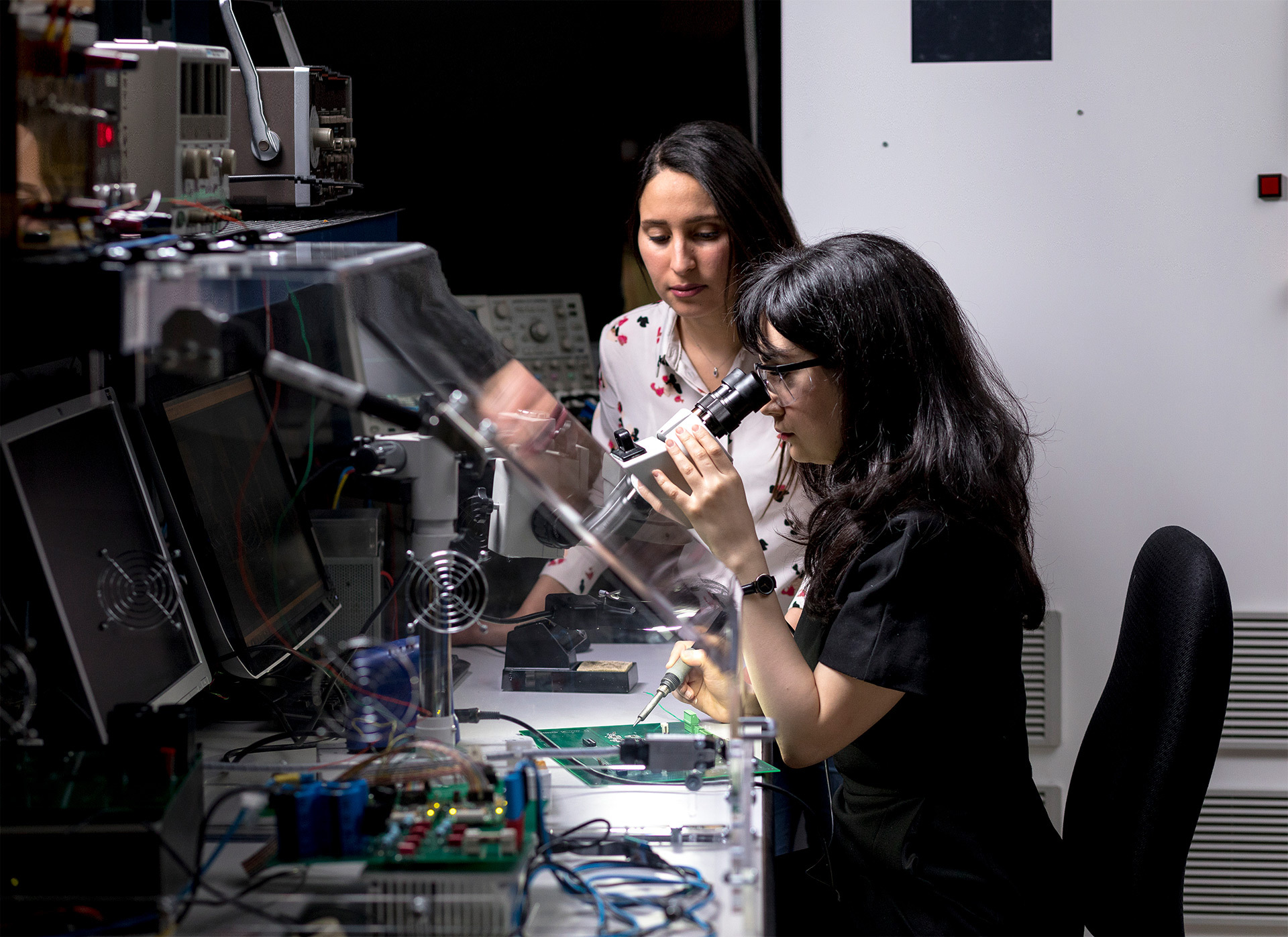
ÉTS provides an ideal environment for conceiving and creating the ideas that will shape the world of the future.