March 4, 2026
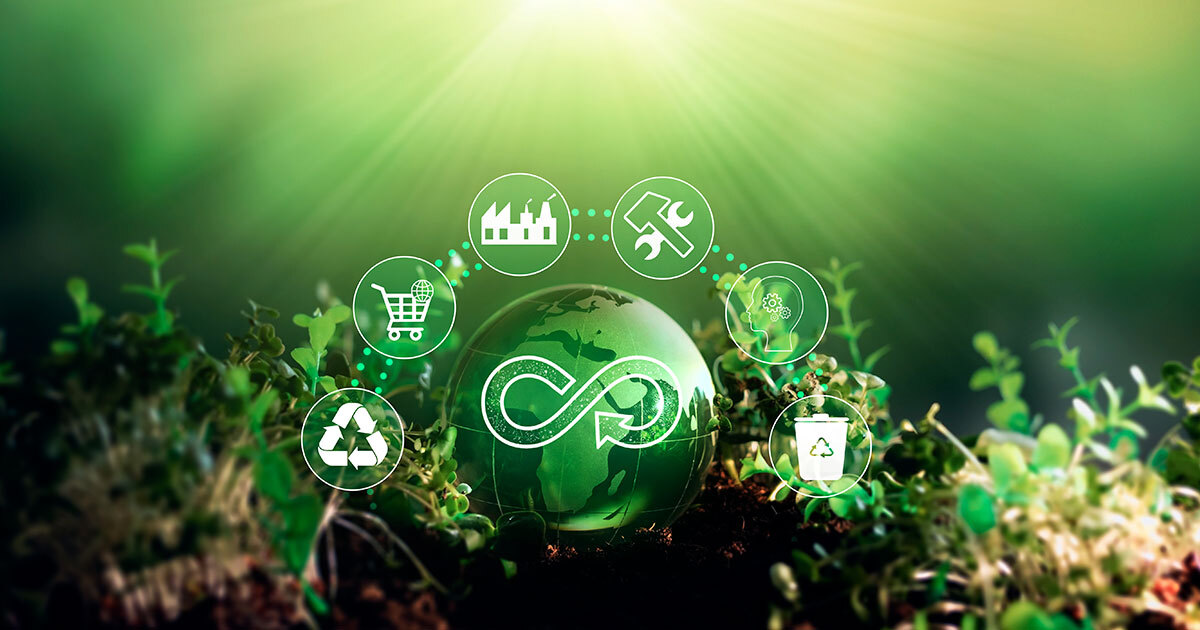
Human societies are consuming more and more resources... while recovering less and less. According to Québec Circulaire, the global circularity rate has fallen from 9.1% in 2018 to just 6.9% in 2025. In other words, a decreasing proportion of extracted materials is being reused, repaired, or recycled. To reverse this trend, several known measures can be taken, such as reuse, repair, and eco-design. However, clear guidelines are still needed to guide action.
These are the issues that Professor Michael Saidani, from the ÉTS Department of Systems Engineering, is focusing on. A specialist in circular economy and reverse logistics, he develops methods, indicators, and digital tools to measure, compare, and tangibly improve the circularity and sustainability of industrial products and systems.
Measuring to act more effectively
Circularity is often presented as a means to an end. However, Michael Saidani points out that not all “circular” strategies are created equal. Recycling a product is generally preferable to discarding it, but it is not necessarily the best option. Reuse or repair often helps avoid further environmental impacts.
Hence, the importance of measuring. Much of his research is devoted to developing indicators to quantitatively assess circularity and its real effects on the environment and the economy throughout the value chain.
Some of these indicators are intrinsic, such as a product's circularity rate. Others are consequential and focus on actual impacts, such as greenhouse gas emissions avoided or economic gains associated with a given circular strategy.
Circularity, but not at any cost
Contrary to popular belief, aiming for 100% circularity is not necessarily desirable. “In some cases, increasing circularity could lead to greater environmental impacts, for example, if recovery processes are very energy-intensive,” explains the researcher.
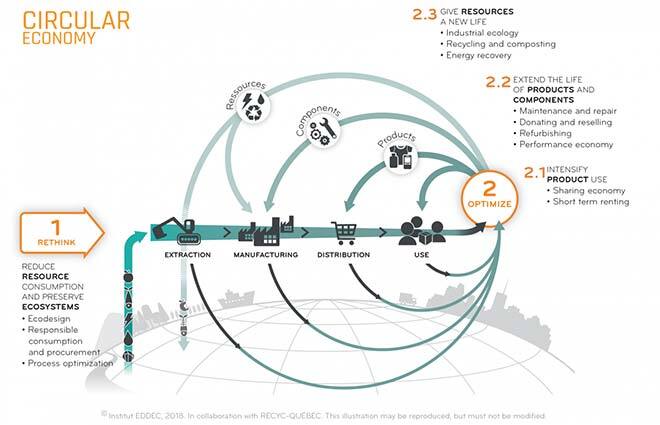
The goal is not to maximize circularity, but to find an optimal balance. Michael Saidani has developed mathematical optimization models, comparable to a “cursor,” that identify the level of circularity to maximize environmental, social, and economic benefits, whether for a product, a factory, or an industrial process.
Digital tools for industry
To transform these concepts into actual levers, Michael Saidani also develops digital tools for businesses. The indicators he designs require input data on materials, processes, and logistics flows, and produce results that can be used for decision-making.
Digital platforms help manufacturers calculate indicators tailored to their situation, compare scenarios, and identify the most promising levers to improve the sustainability, reparability, or environmental impact of their products.
These applications cover virtually all areas of industrial engineering, from design to manufacturing to logistics, and end-of-life products.
Towards intelligent circularity
For future projects, the researcher is focusing on the contribution of digital technologies, such as the Internet of Things and artificial intelligence, towards improving the circularity of industrial systems. Sensors, digital twins, simulation tools, real-time data analysis—these can support more informed decisions, particularly for product recovery, repair, or reconditioning.
But here again, caution is required. “These technologies also have an environmental impact. We must ensure that the gains outweigh the negative effects,” he emphasizes. This involves systematically quantifying environmental benefits and costs using life-cycle and performance analyses.
Producing better, with less
At the heart of Michael Saidani's research lies a clear ambition: to produce more with fewer resources and less impact, without sacrificing economic viability. An expert in circular economy and sustainable development applied to engineering, he aims to offer organizations effective ways to transform their practices.
Measuring circularity, understanding impacts throughout the entire life cycle, striking the right balance between ambition and realism: all essential conditions for the circular economy to move beyond intentions and make a real contribution to reducing the environmental footprint of our industrial systems.