April 27, 2026
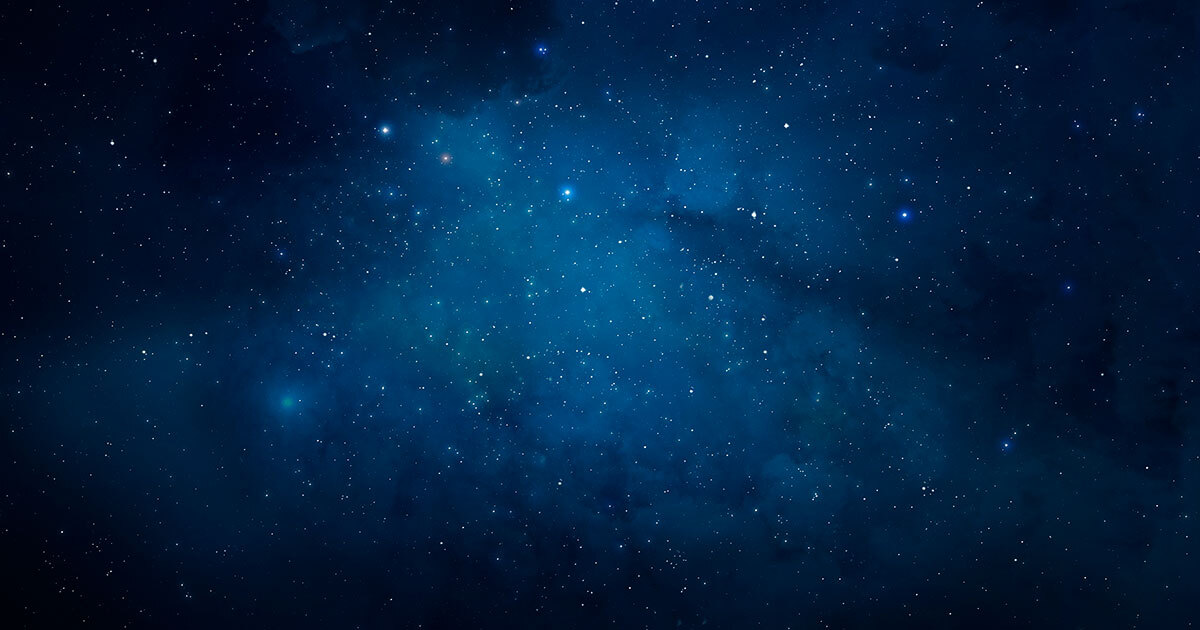
Understanding how physics behaves under the most extreme conditions in the Universe: this is the ambitious personal challenge of Jérôme Quintin, a professor in the Department of General Education at ÉTS, and his collaborators at the University of Waterloo. Far beyond the physical laws that govern our daily lives—the very laws that have brought major engineering advances over the past four centuries—fundamental physics today seeks to push the boundaries of knowledge into realms where our current theories cease to apply.
Exploring the infinite realm of energy
In laboratories on Earth, physicists recreate extreme conditions using particle accelerators: massive facilities propelling elementary particles to very high speeds before they collide. These experiments are used to observe the behaviour of matter at otherwise inaccessible energy levels.
But there is another, even broader laboratory: the Universe itself. By observing very distant galaxies and stars, scientists are actually looking into the past. Since light takes time to reach us, the farther away an object is, the older it is. This cosmic window allows us to trace back to the very first moments of the Universe.
A footprint of the past to decipher
However, tracing the Universe back to its origins poses a major challenge. In its early days, some 13.8 billion years ago, the Universe was so hot, dense, and compact that light could not travel freely through it. It is therefore impossible to observe that era directly.
Instead, scientists analyze the traces left behind by these extreme conditions—a sort of cosmic fossil imprint. By decoding these signatures, they can reconstruct the properties of the early Universe and test various physical theories.
The enigma of gravity and quantum mechanics
One of the major challenges in modern physics is the difficulty of reconciling two fundamental pillars: gravity, described by general relativity, and quantum mechanics, which governs the behaviour of particles on the infinitely small scale. Both theoretical frameworks work remarkably well… but only separately.
When trying to combine them under extreme conditions, such as those that prevailed at the very beginning of the Universe, inconsistencies arise. This is precisely the frontier where Jérôme Quintin and his collaborators are conducting their research.
A promising theory: quadratic gravity
To overcome these limitations, the researchers drew on an existing theory known as “quadratic gravity.” This approach extends the classical description of gravity to make it compatible with the principles of quantum physics, particularly at very high energies.
The contribution of this research is to apply this theory to a new context: the early Universe. Using advanced calculations, the researchers demonstrate that this theory could remain consistent even at extremely high energy levels—what physicists call “ultraviolet completion.”
Interesting fact: the predictions from this model agree with current astronomical observations. In other words, even though we cannot directly observe the first moments of the Universe, the traces measured today appear to be consistent with this new theoretical description.
Another striking result is that the theory becomes more accurate as energy increases—precisely where traditional models fail. At low energies, however, it vanishes from observation, confirming that it is not intended to replace existing theories, but rather to complement them in the exploration of extreme conditions.
Fundamental research with unpredictable implications
At first glance, this work may seem far removed from practical applications. It will not lead to new technology overnight. Yet the history of science shows that yesterday’s fundamental advances are often the source of today’s innovations, sometimes decades later.
In their quest to understand the universe at its limits, researchers are also developing new mathematical and computational tools. These methods can then be applied to other fields, namely engineering, where there is interest in systems operating under extreme conditions, such as nuclear fusion or hypersonic aerospace technologies.
Furthermore, this work could one day advance emerging fields, such as quantum materials or superconductors.
Pushing the boundaries of knowledge
In engineering terms, one could say that current models in physics reach a breaking point beyond a certain energy threshold. Consequently, to continue making progress, we must develop new theoretical frameworks that remain consistent, stable, and in line with observations.
This is precisely what this researchaims to do: attempt to extend our models beyond their current limits. Exploring the extreme conditions of the early Universe opens a window onto a largely unknown realm of physics.
Ultimately, the question remains: what will we discover as we push the frontiers of knowledge just a little further?