December 12, 2025
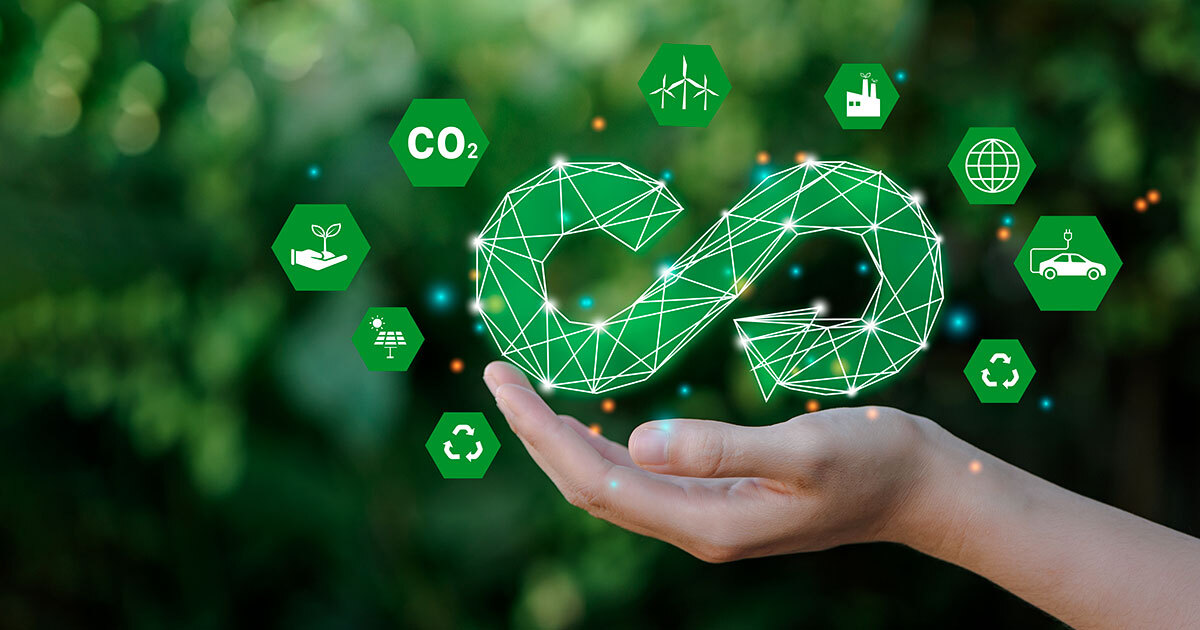
Only 6.9% of the global economy operates in circular mode, down from 7.2% in 2023. “My battle is to make industries cleaner,” says Michael Saidani, Professor of Systems Engineering at ÉTS. His goal is to equip companies with the tools they need to adopt economically viable design, manufacturing, and consumption processes, while minimizing their environmental impact.
Specialized in quantifying circularity performance, Michael Saidani assesses the environmental footprint of a product's life cycle. He identifies key stages in the process, from raw material extraction to distribution, including product use and recirculation, and proposes solutions to improve the circularity chain.
A Background in Mechanical Engineering
Michael Saidani holds a bachelor's degree in Mechanical Engineering from the École normale supérieure Paris-Saclay (ENS), a dual master's degree in Mechanical Engineering from ENS and Industrial Engineering from École centrale Paris (now affiliated with Paris-Saclay University), and a PhD in Industrial Engineering from Paris-Saclay University.
Originally from Lille, a city in northern France, Michael decided to pursue his higher education in Paris before moving to the United States. There, he completed part of his PhD thesis at the University of California, Davis. Thanks to a Fulbright scholarship, he was able to put his assessment methods into practice by working with John Deere, a leader in agricultural equipment manufacturing. In addition to studying machine management and improvement methodologies, the researcher focuses on farming practices that generate the least greenhouse gas emissions. “Crop rotation, integrated pesticide and fertilizer management, and timely planting improve soil health in a sustainable way,” says Michael.
When 70% Is Greater Than 100%
From 2019 to 2023, Michael Saidani completed a postdoctoral fellowship at the University of Illinois Urbana-Champaign as a research associate in circularity and sustainable design, under the supervision of Professor Harrison Kim.
Working in the field, Michael realized that 100% was not always synonymous with perfection. Sometimes, the optimal circularity is 70%. “We need to view circularity performance as an indicator and find the optimal level that ensures environmental sustainability,” argues Michael Saidani. This ideal state varies from sector to sector.
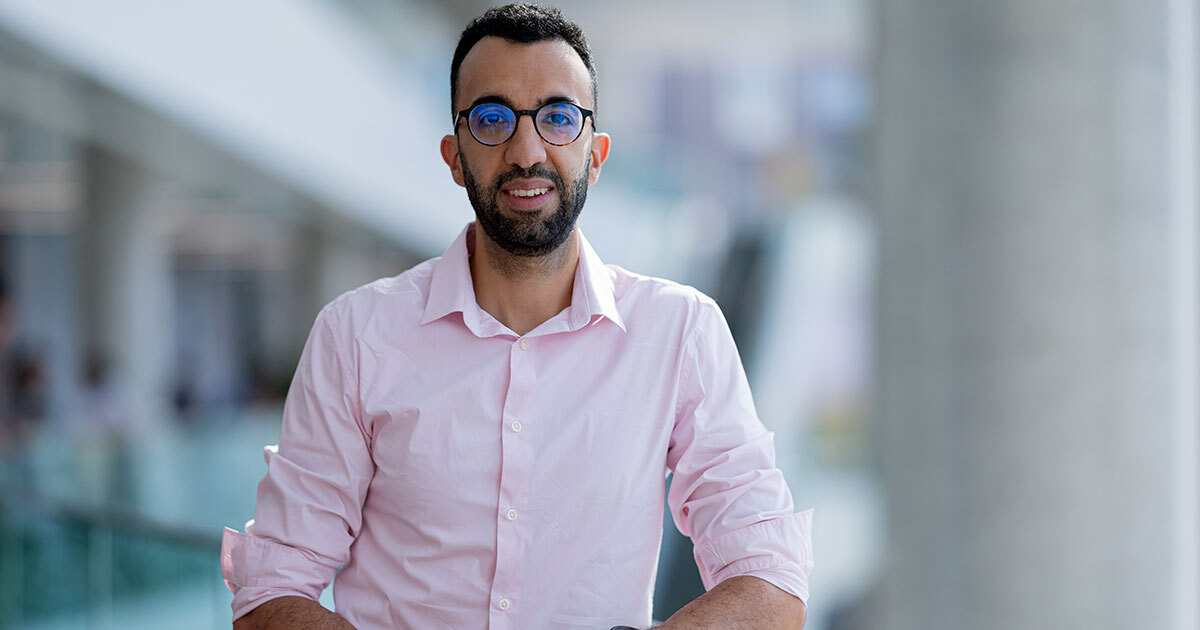
ETS Professor Michael Saidani
ÉTS, Committed to Promoting Environmental Responsibility
ÉTS is increasingly integrating environmental issues into its programs. In July 2025, Michael Saidani was appointed Professor of Systems Engineering at ÉTS. His mission: to develop two new courses based on his area of expertise. He will teach undergraduate students life-cycle assessment techniques that will enable them to quantify the environmental impact of the systems they design. “There is always a project in my courses, because I give them tools that they must apply in a practical context,” explains Professor Saidani.
Digital Technology and Absolute Sustainability
Two emerging themes are at the heart of Michael Saidani's concerns: the use of digital technologies for sustainable development and absolute sustainability.
Michael is developing promising new technologies, including a digital passport for products that indicates their sustainability, composition, repairability, and environmental impact.
The second challenge is to verify whether circular economy strategies respect planetary boundaries. “As a matter of fact, we have a budget for the planet that we must not exceed,” summarizes Michael Saidani.
He wants to convince industries to turn constraints into opportunities for sustainable innovation. “Is it possible? Yes. Is it difficult? Yes,” acknowledges Professor Saidani. Fortunately, the new generation of ÉTS engineers will be trained to contribute to a more environmentally friendly society.