March 2, 2026
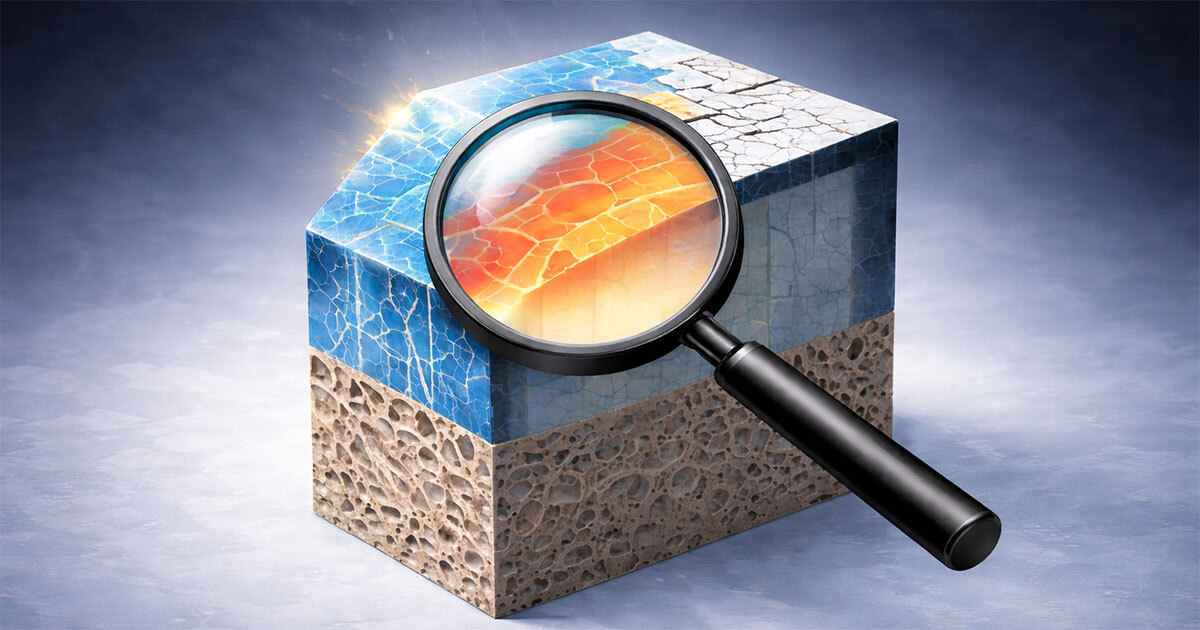
What if a single material could be flexible in one place, rigid in another, and withstand extreme conditions without compromise? Using additive manufacturing, ETS Professor Alena Kreitcberg is developing new metallic materials with customized properties.
Unlike traditional materials, whose properties are generally uniform throughout the whole piece, the researcher is interested in non-homogeneous materials that can adapt locally to their environment depending on the application. These materials, non-existent until recently, are paving the way for unprecedented applications in aeronautics, transportation, energy, and biomedicine.
Materials that adapt to their function
At the heart of Alena Kreitcberg’s research are metallic materials with functional gradients. The idea is simple yet revolutionary: to design a single part whose mechanical properties vary from one point to another. One area may be more ductile, or “flexible,” while another may be more rigid, or heat-resistant.
“Before, we had to make compromises,” explains the professor. Today, it is possible to design a material that meets the precise local requirements of the application. »
This is made possible by laser powder bed fusion (LPBF) additive manufacturing, among other techniques. The process involves locally melting a metal powder layer by layer, using a laser, to form parts with complex geometries. By modifying the manufacturing parameters (in particular, the laser’s power and speed), it is possible to control the thermal conditions applied to the powder.
However, these thermal conditions (cooling rate, thermal gradients, heating/cooling cycles) directly influence the material’s microstructure, i.e., the organization of the metal grains inside the part. By adjusting these parameters during manufacturing, the material's internal structure is modified, thereby altering its mechanical properties.
Materials with gradient properties for more efficient and sustainable components
This ability to create customized microstructures is especially promising for the aerospace industry, where many critical components, including turbine blades, are subjected to extreme conditions: high temperatures, rapid thermal variations, and complex mechanical loads.
Alena Kreitcberg is working on designing parts whose microstructure can adapt to local stresses. For example, in the case of turbine blades, the trailing edge can be optimized to resist creep at high temperatures, while the leading edge can be reinforced to better withstand mechanical fatigue. The overall objective is to develop the manufacturing process and study the capabilities of this type of material. For turbine blades, this approach makes it possible, for example, to produce stronger, longer-lasting parts requiring less maintenance and generating less material waste.
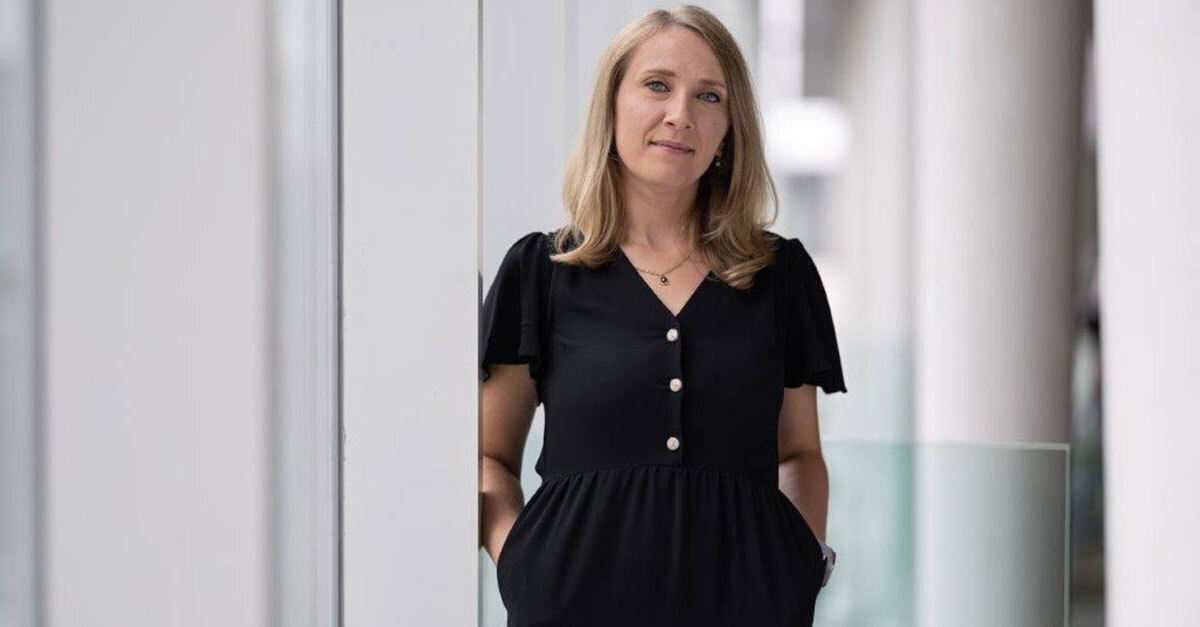
ÉTS Professor Alena Kreitcberg
Predicting microstructure before manufacturing
At the heart of this research program focusing on different types of alloys is the development of a simulation-based predictive tool. The research team aims to establish precise links between additive manufacturing parameters, the resulting microstructure, and the final mechanical properties.
This tool will help predict the resulting microstructure for different combinations of 3D printing parameters, thereby facilitating the selection of optimal conditions for manufacturing components with targeted properties. A significant part of the project also focuses on understanding the mechanisms of solidification, both in the material itself and in the transition zones, in order to understand their influence on the balance between strength and ductility.
The performance of these components will then be evaluated using creep-fatigue and thermomechanical-fatigue tests to demonstrate their superiority over traditional homogeneous materials.
Next-gen metal composites
Alena Kreitcberg’s second area of research focuses on another class of emerging materials: interpenetrating phase metal composites. These materials combine two distinct metals, interconnected in a complex three-dimensional architecture.
A practical example: a 3D-printed steel structure with a porous, controlled, and modular architecture, into which liquid aluminum is poured. Liquid aluminum fills the pores and, after solidification, forms a bimetal composite with combined and adjustable properties.
Depending on the size of the pores, geometry, and spatial distribution within the structured architecture, it is possible to modulate the material's thermal conductivity, mechanical strength, and weight. This approach is especially relevant in a context where reducing vehicle weight has become an essential lever for reducing fuel consumption and CO₂ emissions.
Modelling and artificial intelligence
To accelerate the development of these complex materials, Alena Kreitcberg relies on digital modelling and artificial intelligence, which significantly reduces the number of experimental trials required.
By rethinking a material not as a uniform entity, but as an adaptable and functional system, this research is helping to profoundly transform the way we design engineering parts, and paving the way for a new generation of truly customized materials.